DisKinect
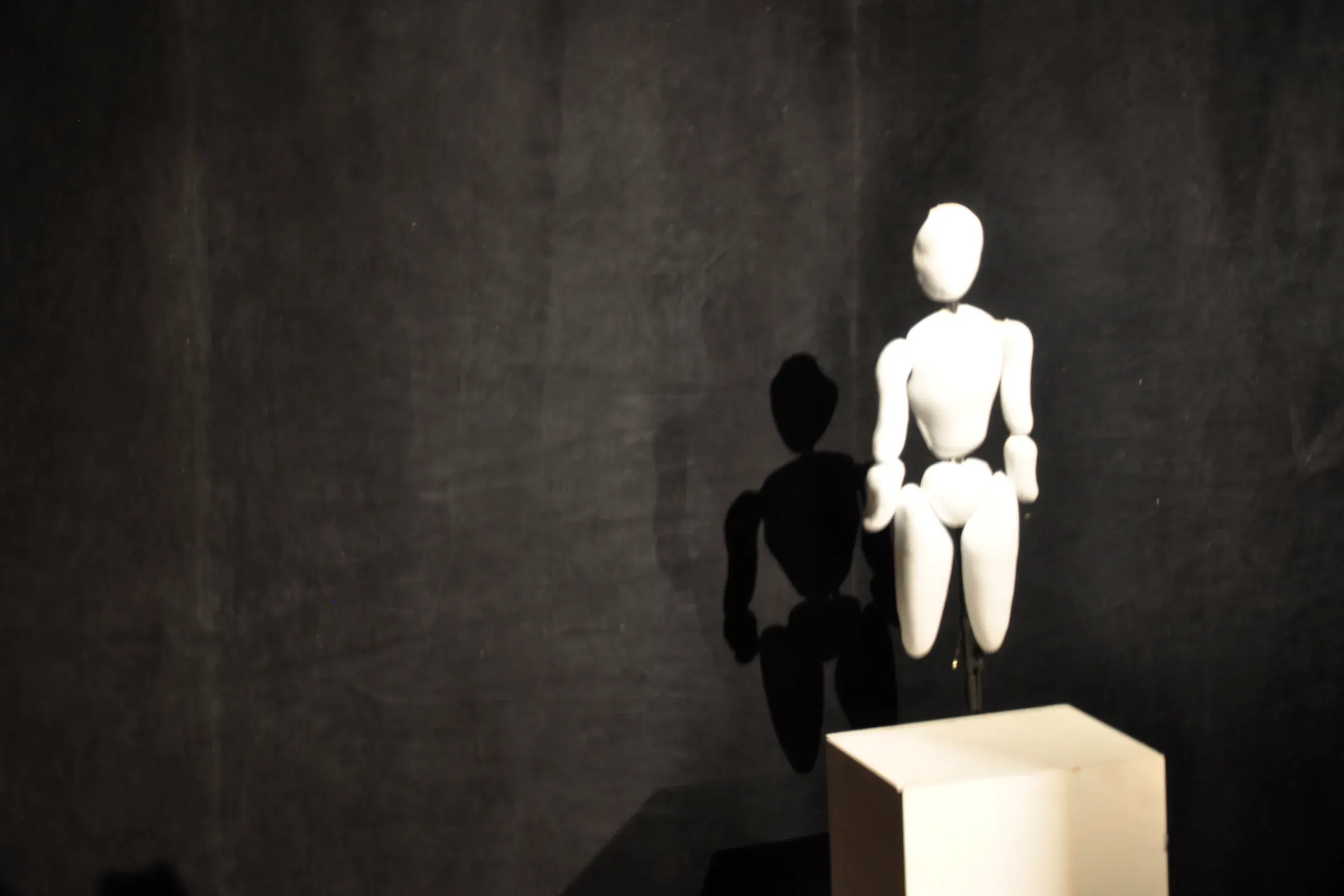
DisKinect began at an Art Hack Weekend at Eyebeam in New York in August 2011. The other four on the team were coworkers who already knew each other. I was the only artist, and my job was to give the thing a story and a concept.
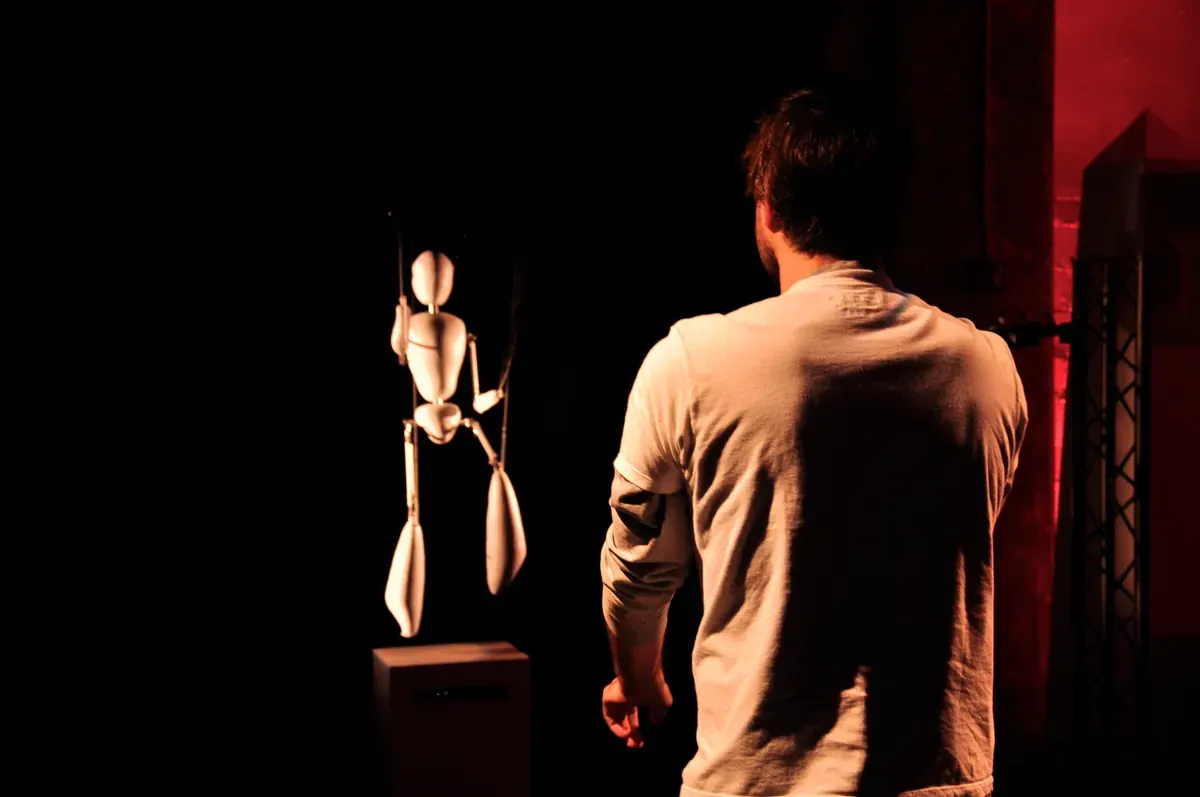
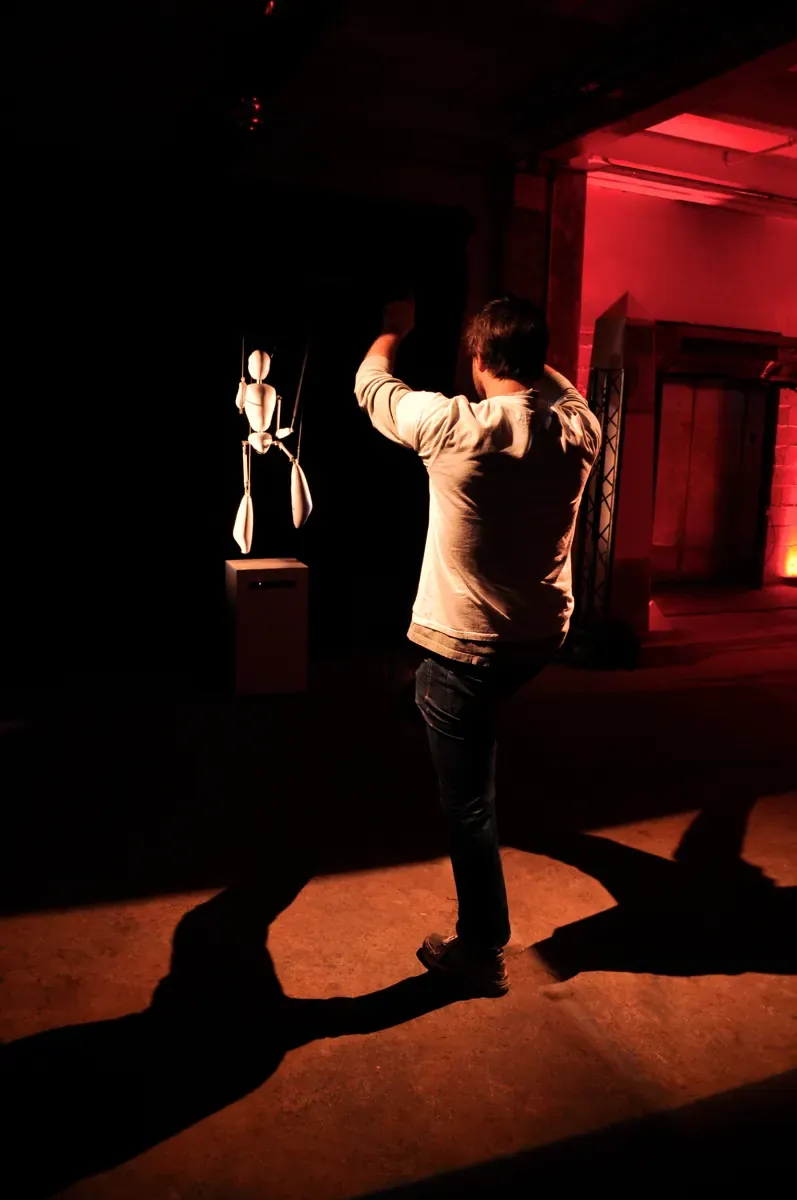
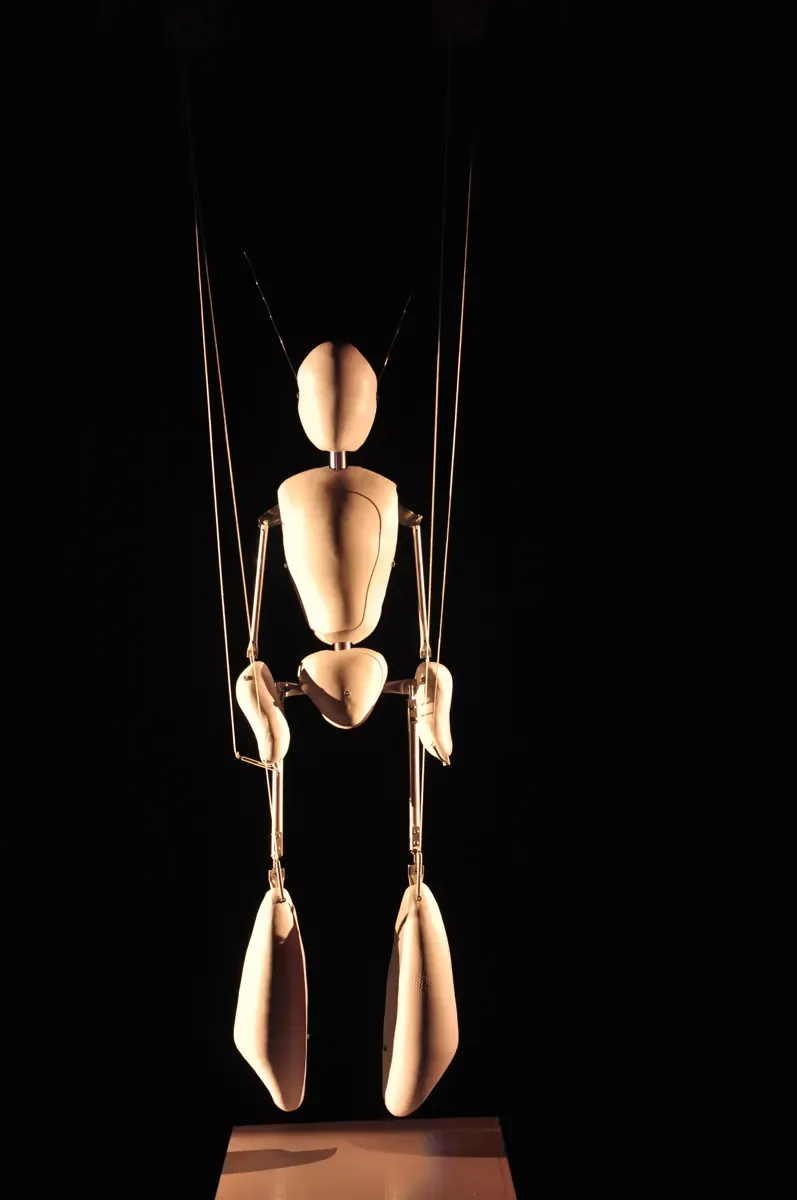
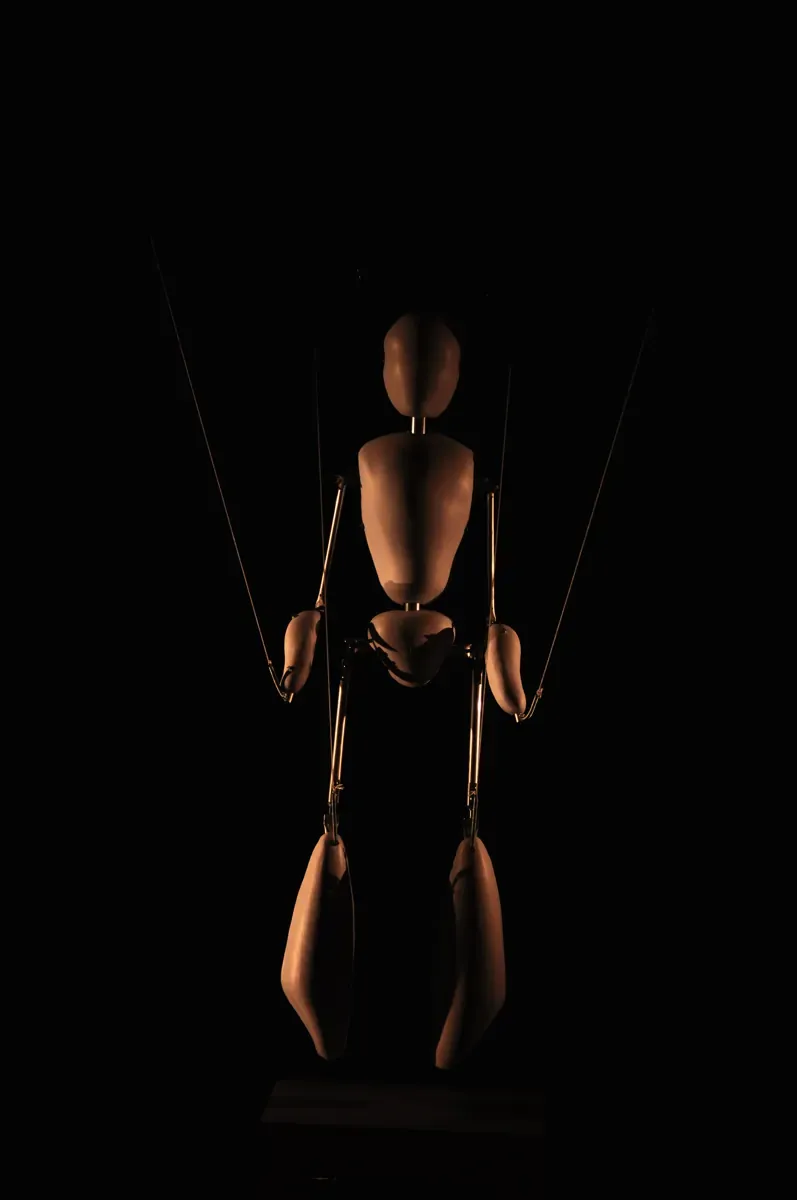
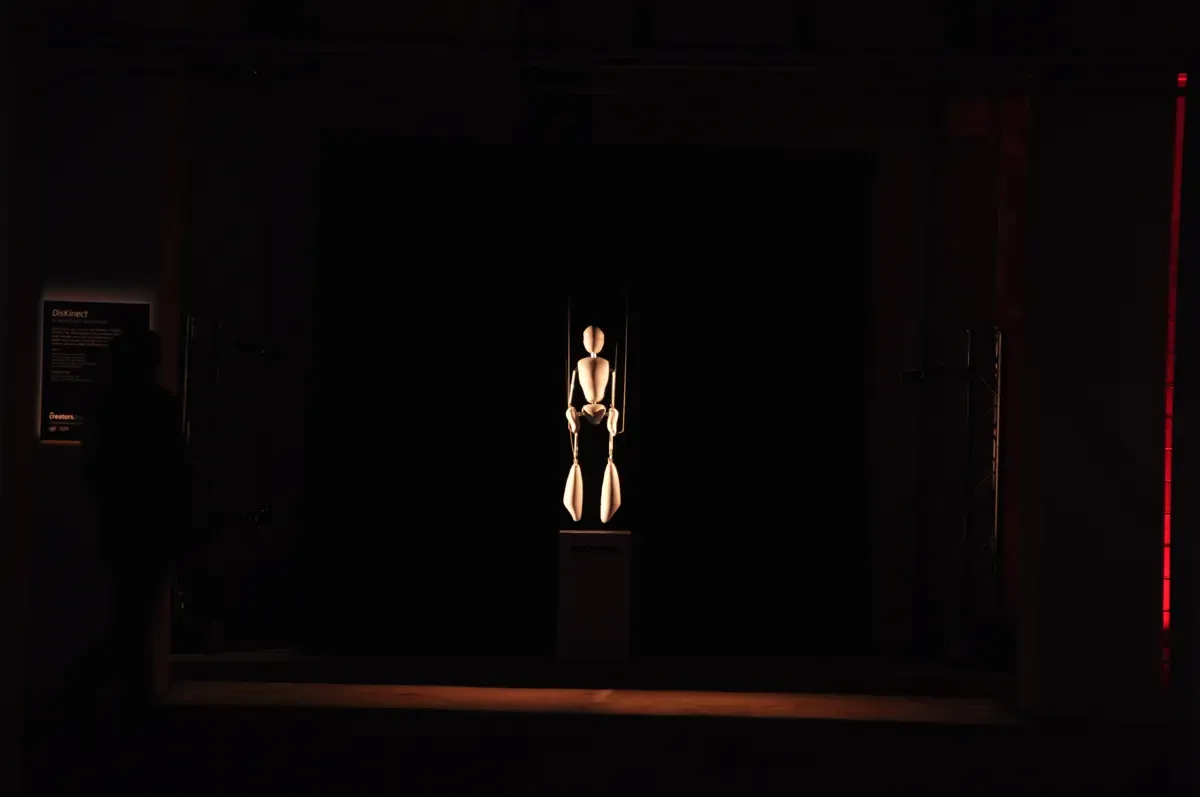
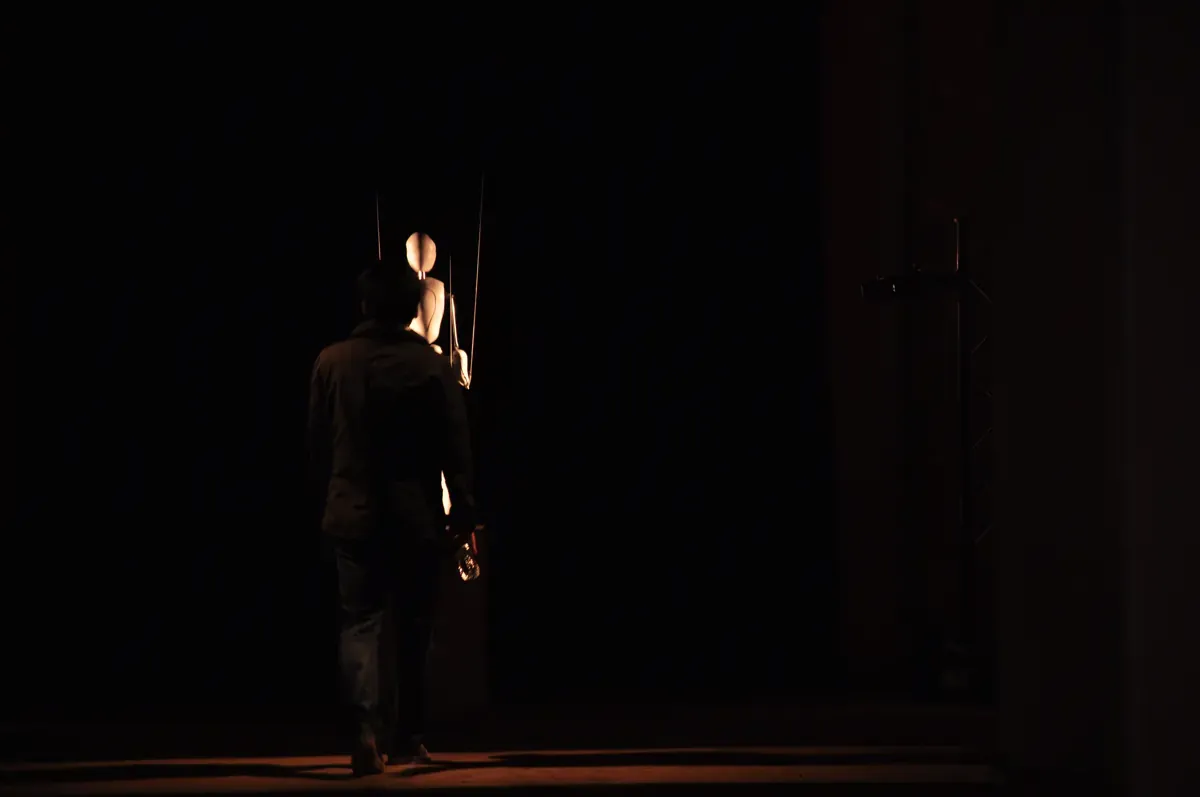
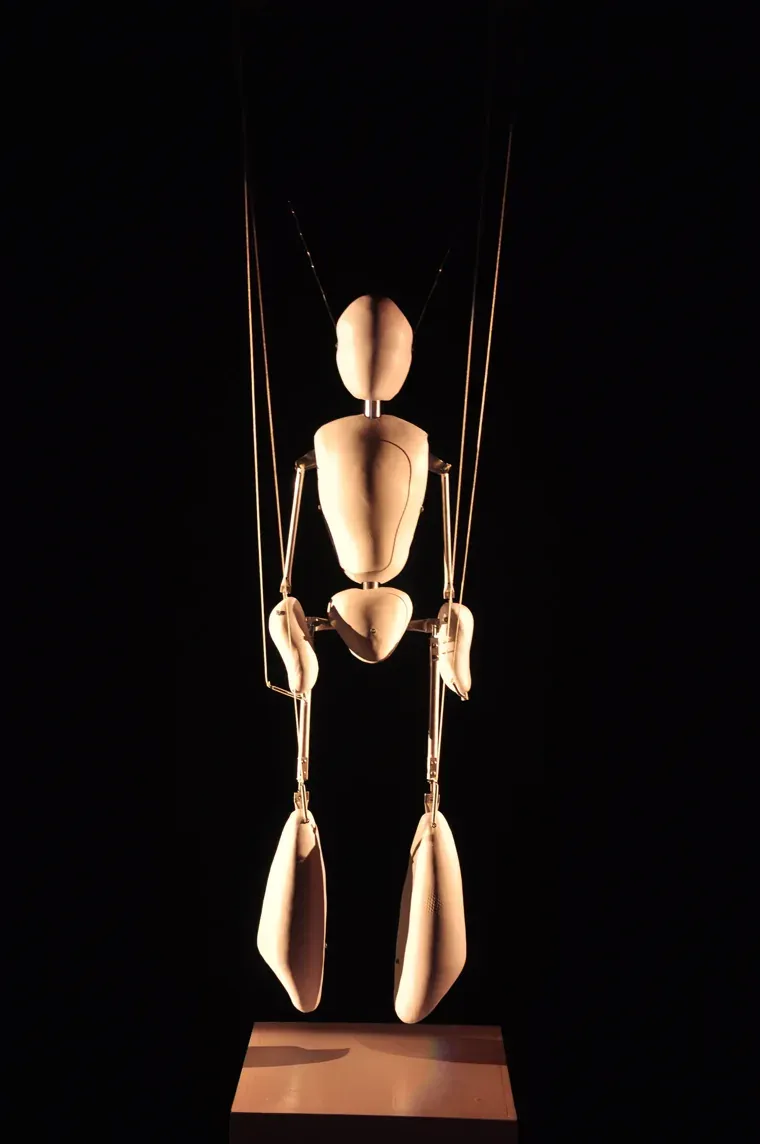
The idea was that the digital copies of ourselves that large tech companies build pull our strings, emotionally and psychologically, and they do it for profit. Technology puts a distance between you and yourself. A hacked Kinect read the pose of whoever stood in front of it, and a four-foot puppet, hung on strings in mid-air, moved to match.
The puppet
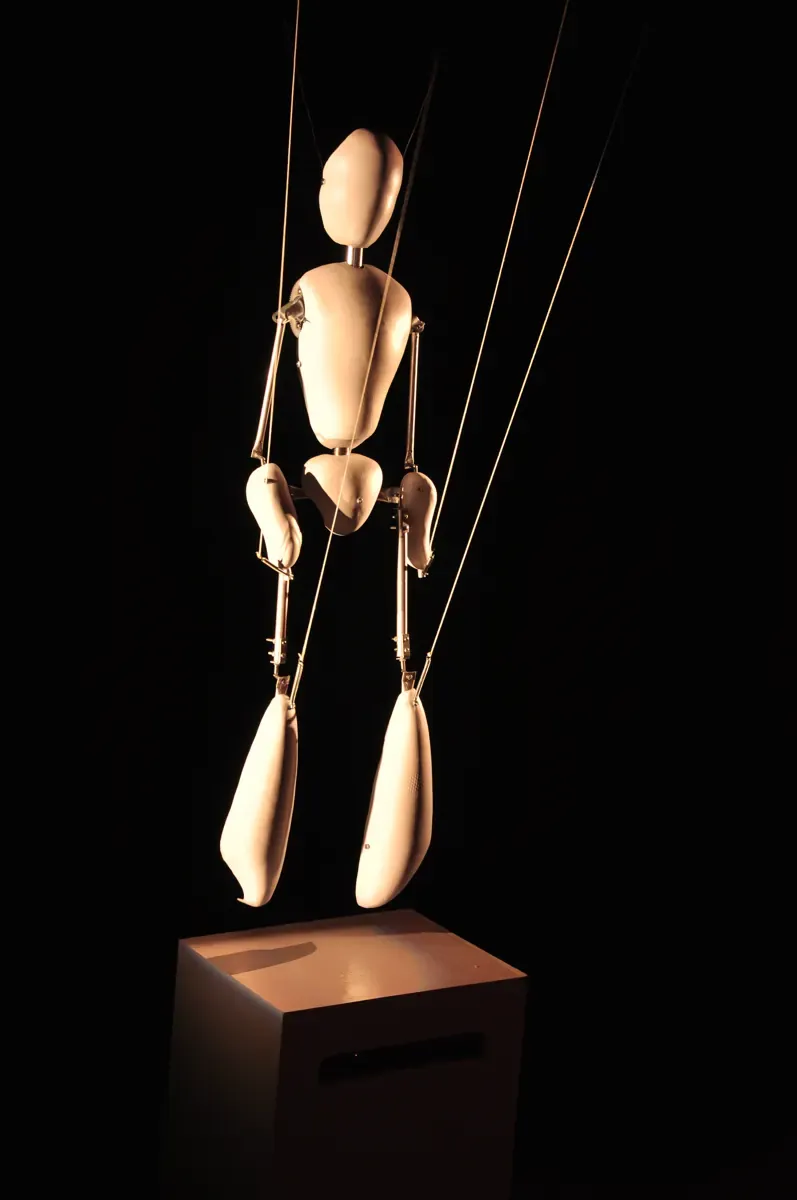
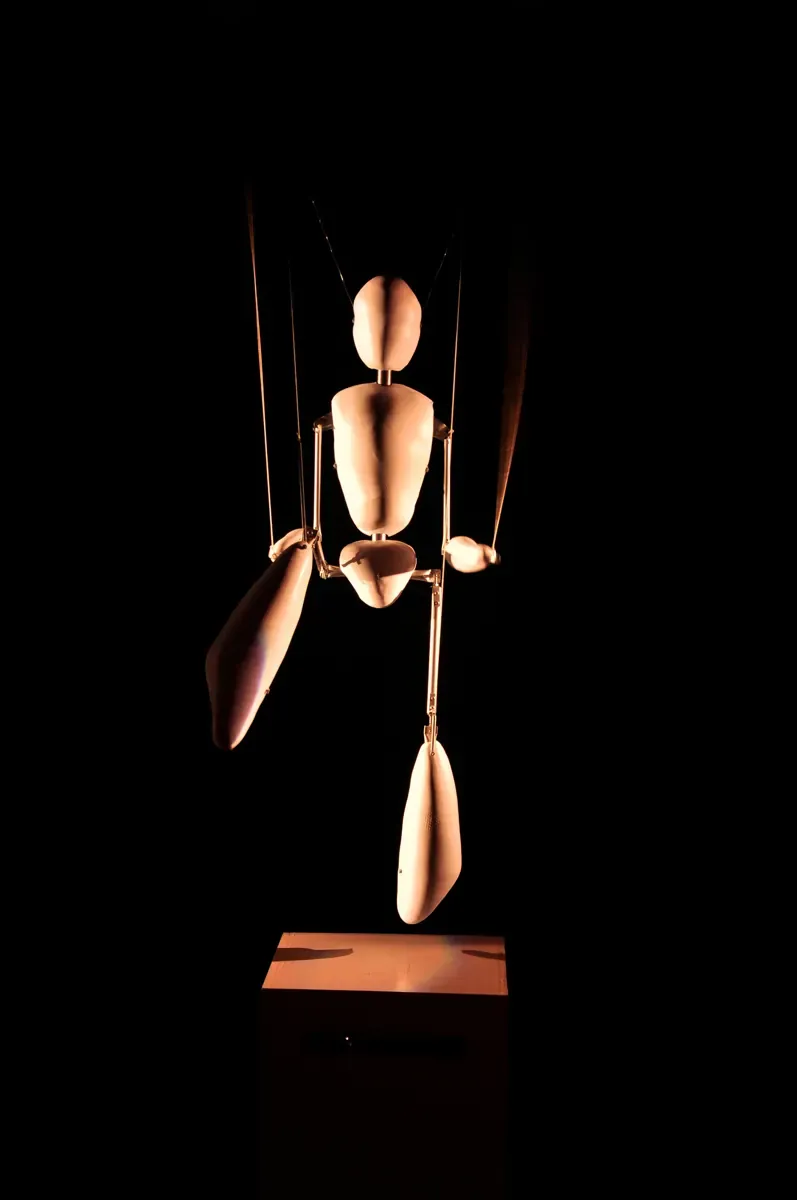
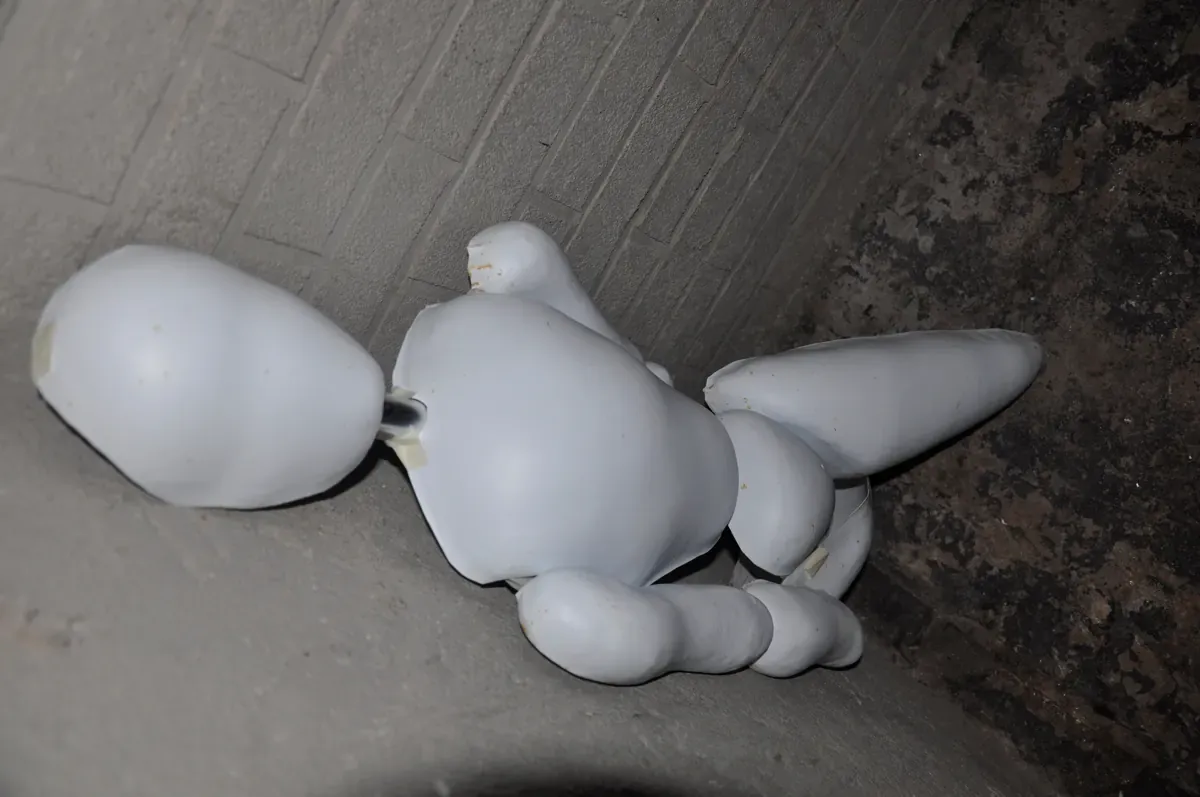
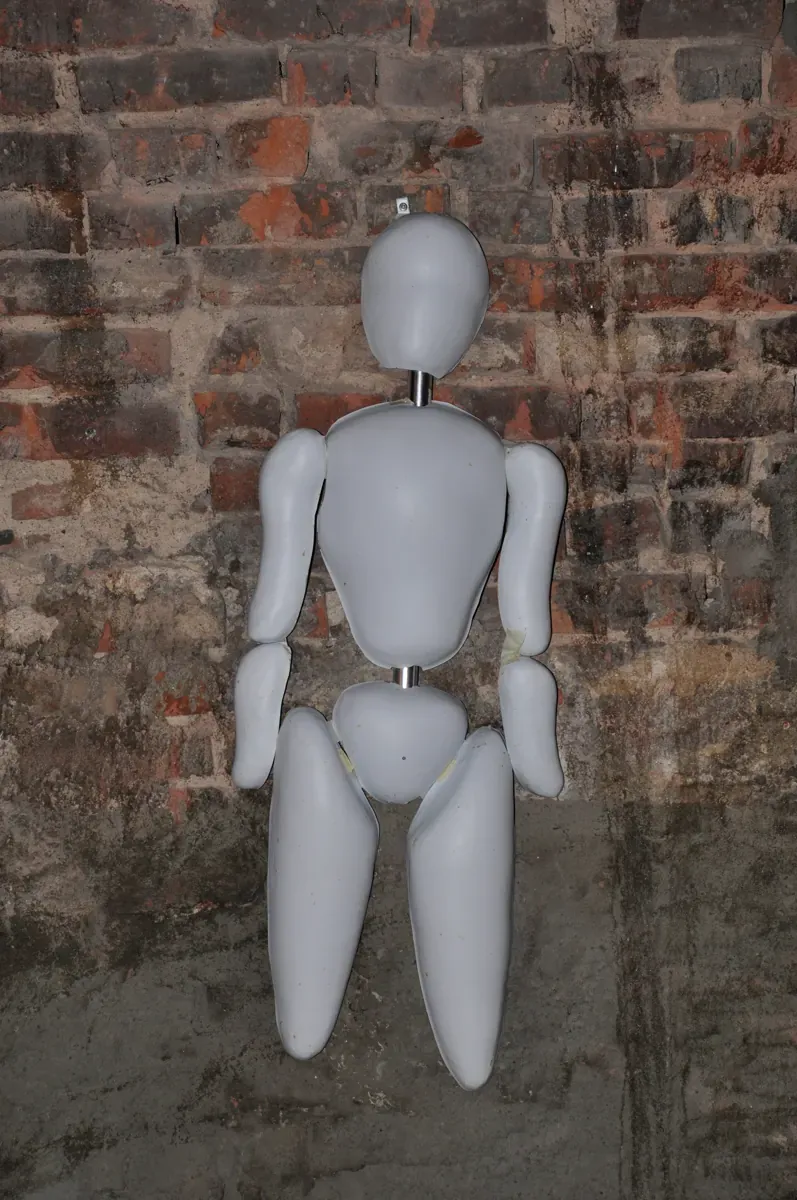
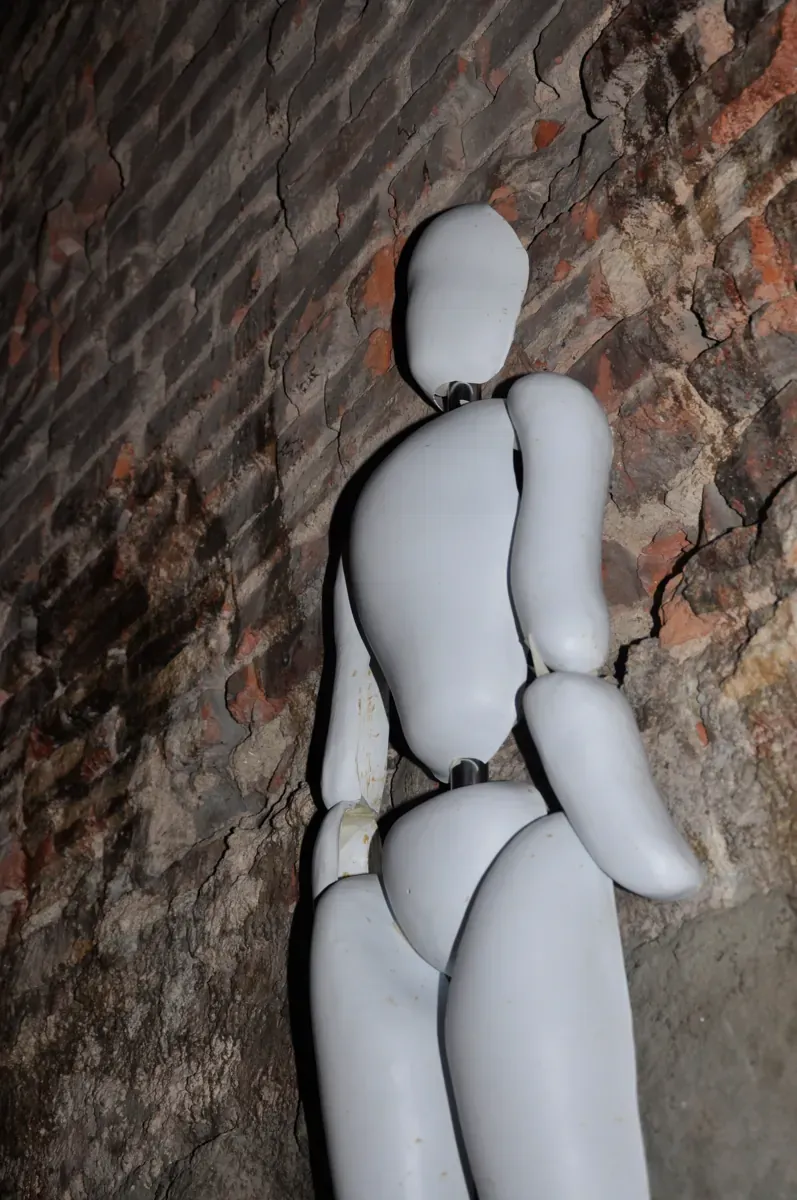
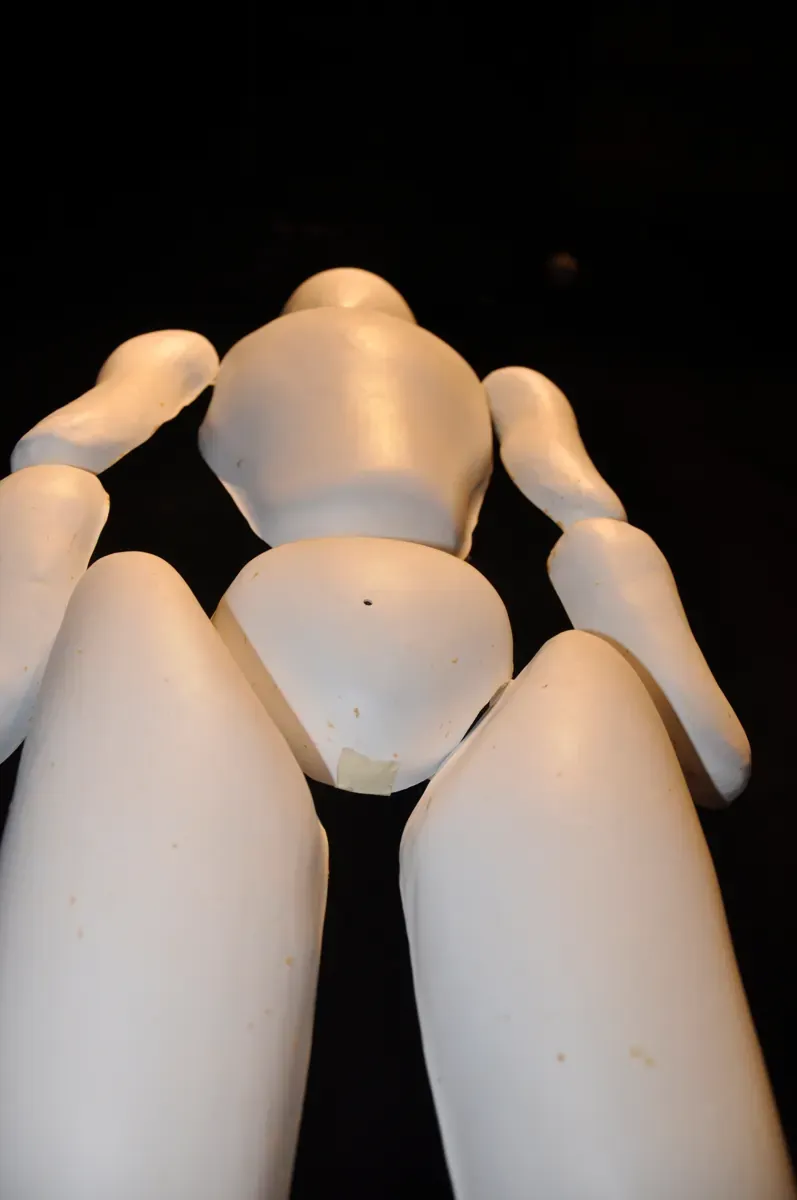
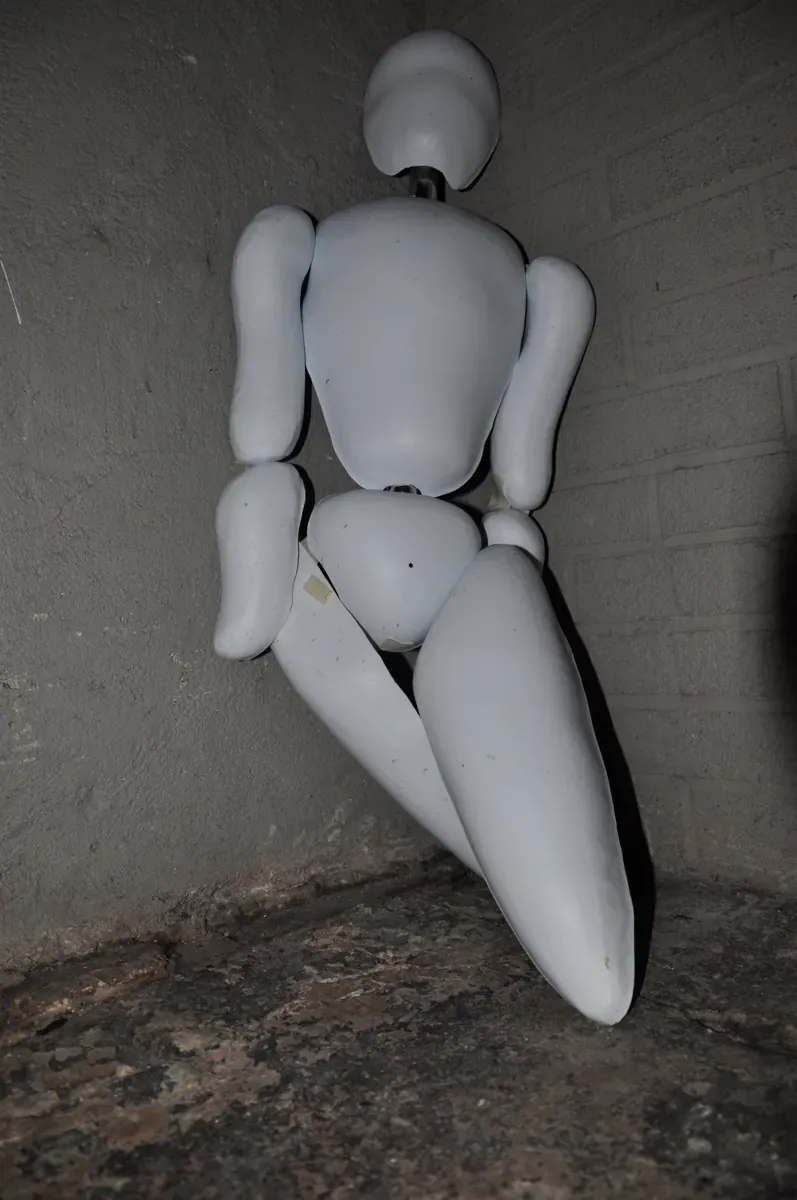
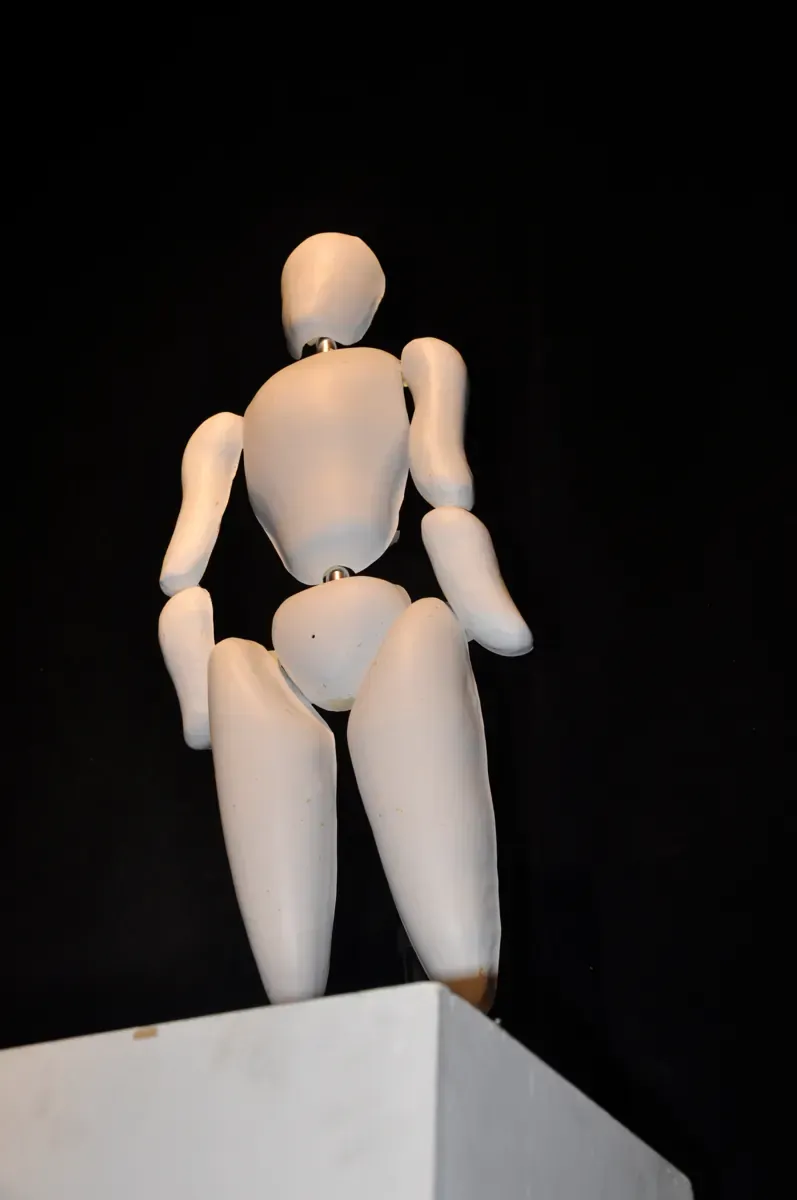
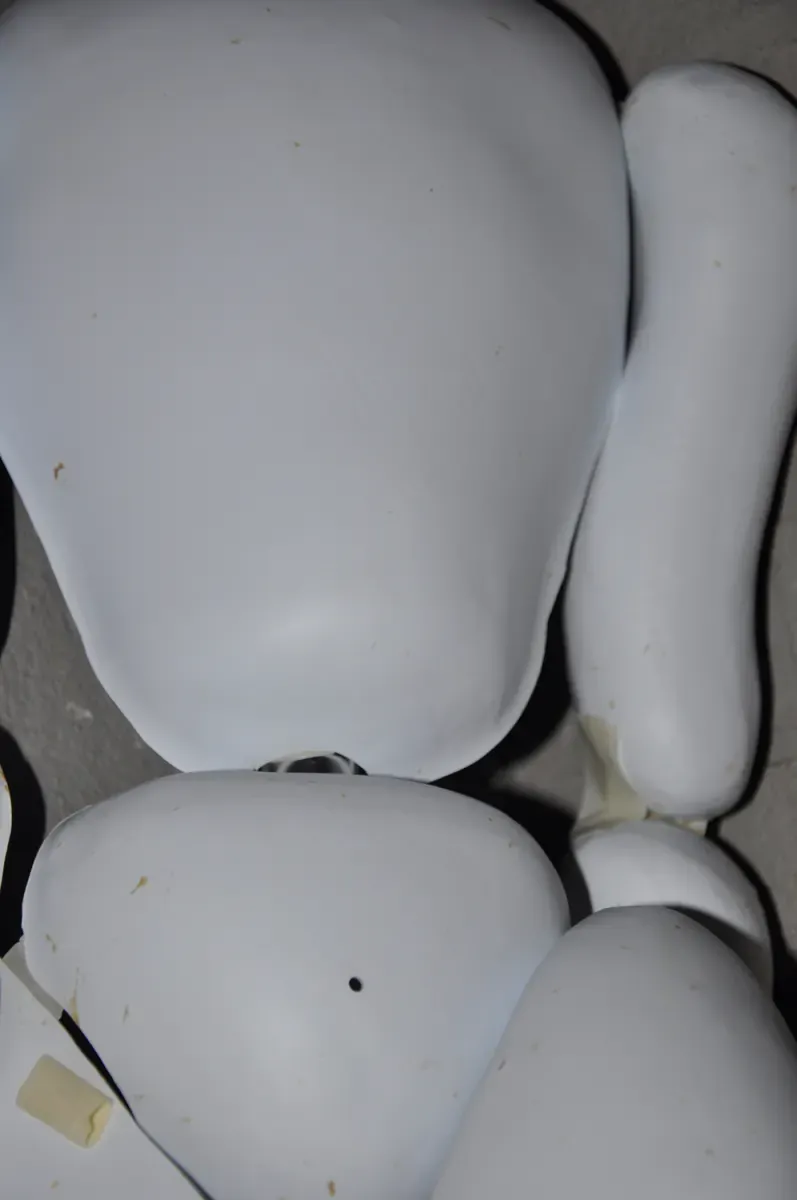
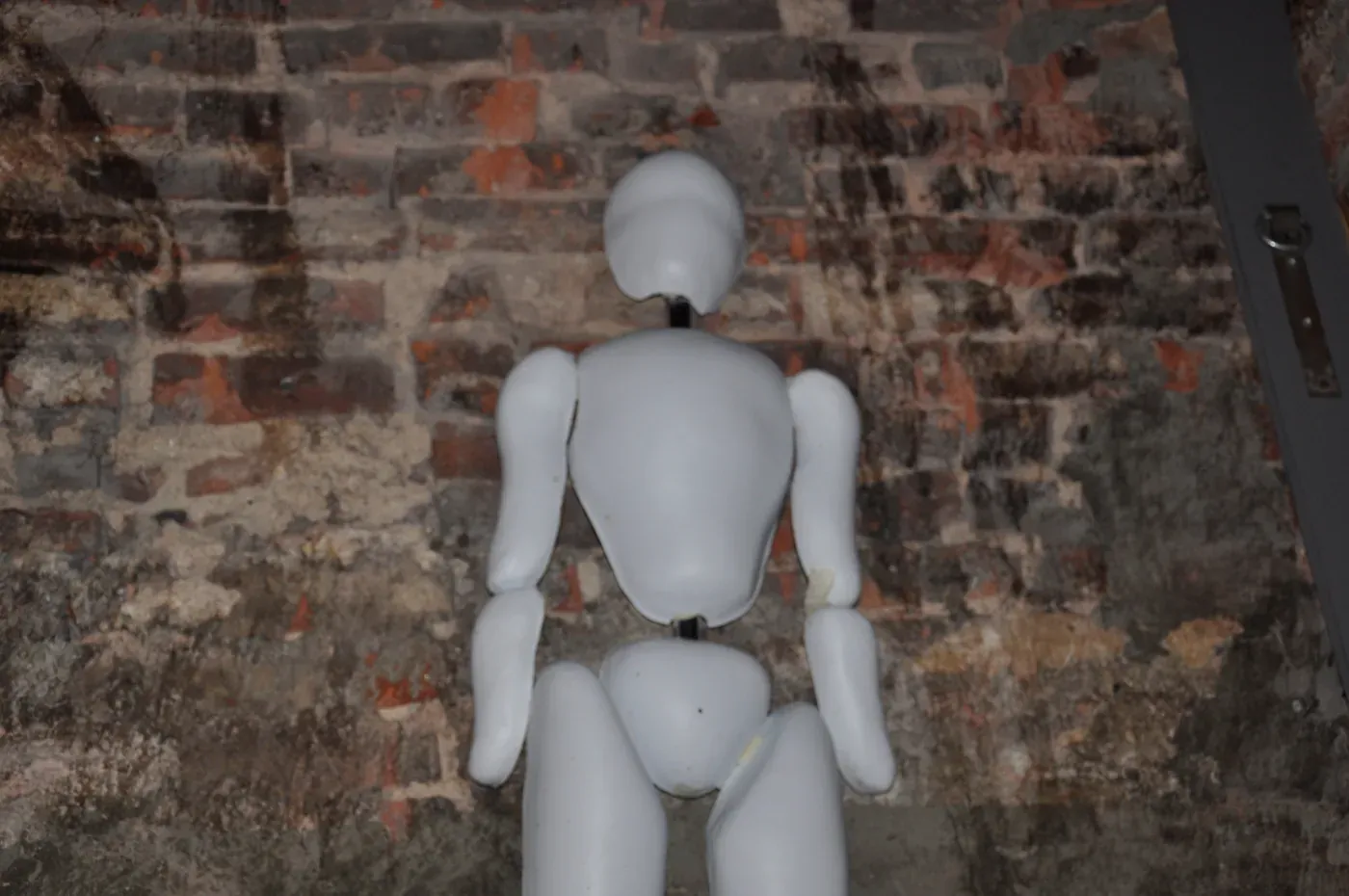
I believe the puppet was my idea, and I made it. The skeleton is hollow aluminium tube with metal joints. The white shell is vacuum-formed plastic: I sculpted the forms in clay, built a vacuum-forming machine, heated the plastic sheet and pulled it down over the molds. It has no face.
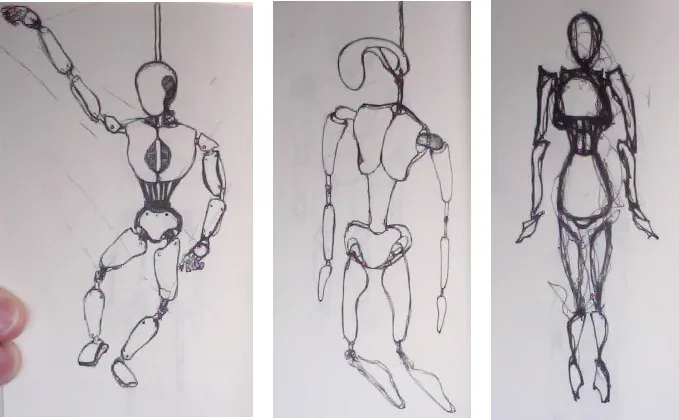
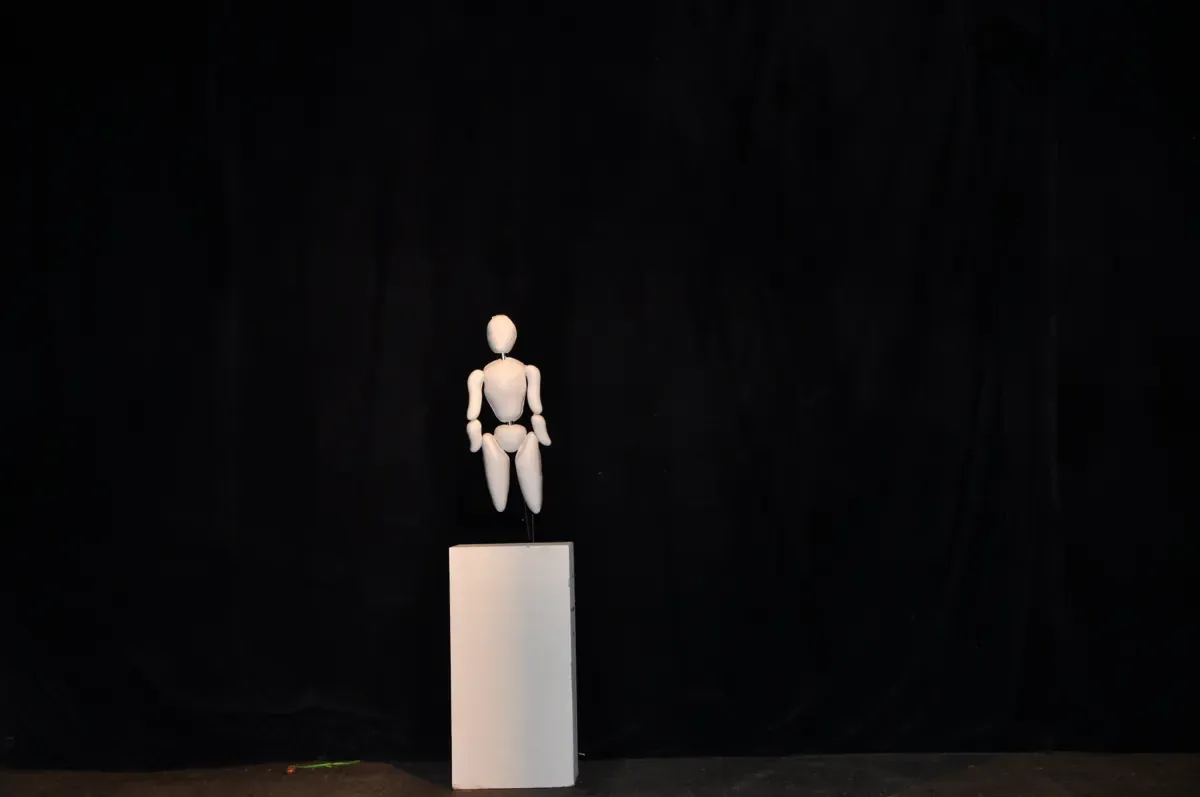
Richard Mai built the mechanics that worked its strings. The software was written in C++ with Cinder and drove the motors through an Arduino and custom electronics. Photographs from 29 September 2011 show the puppet finished, standing on a white plinth against brick and black cloth.
Shown
The Creators Project, the arts programme run by Intel and Vice, showed DisKinect in DUMBO, Brooklyn, in mid-October 2011. It worked the whole time, and nothing broke.
It was quick to respond. Move your left arm and its left arm started moving at once. But it took longer than you did to arrive at the pose, so people held their poses, sometimes for a long time, waiting for the puppet to catch up. It was generally doing what you did, in the uncanny valley. We later made a time-lapse from the Kinect’s own colour camera, a kind of stop motion of that disconnect, and a kaleidoscope remixed from the hundreds of people who stood in front of it.
What it holds
DisKinect was one of my first major projects involving code. On RSNBRG, the year before, a mentor built the app and I stayed at a distance from the development. Here I learned Cinder, and it got me into openFrameworks.
The team: James Donovan, puppet artist and technician. Mario Gonzalez and Guojian Wu, Kinect and C++ developers. Richard Mai, puppet mechanics and technician. Ahmad Saeed, producer, electronics and Arduino developer.
Photographs, 2011