Sketches in Processing
Processing is where I learned to draw with code. The archive keeps two runs of my own sketches: small ones from February to May 2011, and geometry for the 3D printer from March 2017. Almost none of it was saved as pictures at the time, so most of the images here are the original code, run again in November 2026.
2011: first sketches
The first files are exercises from February 2011: a sine wave drawn in points that grows taller with every click, and a line pulled from the middle of the window to the mouse.
Falling Frame
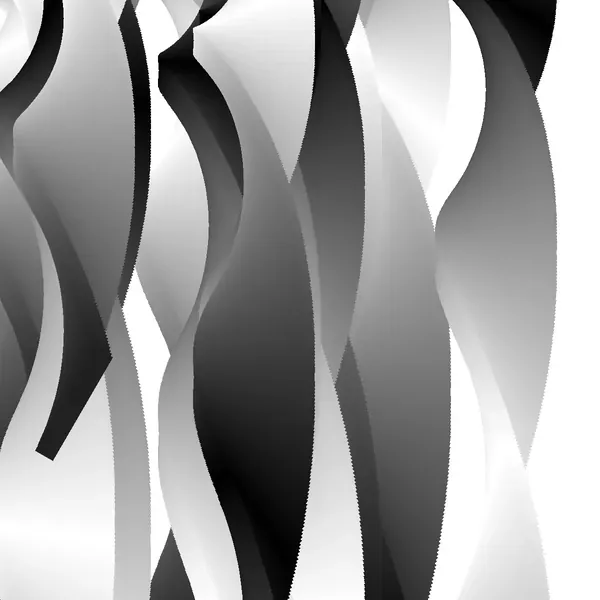
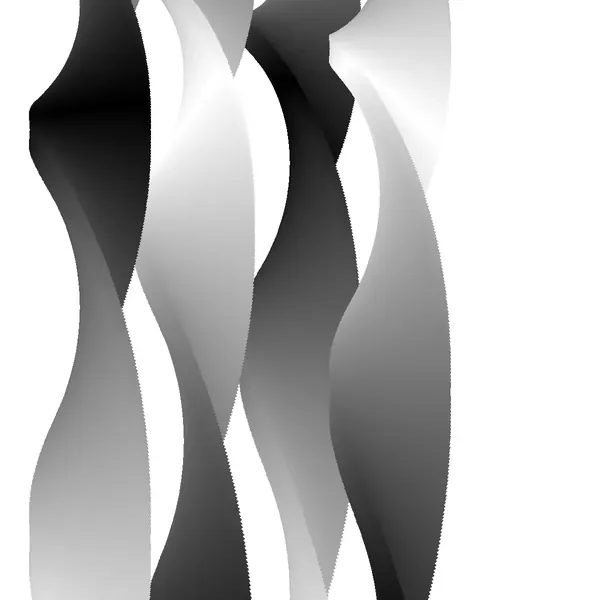
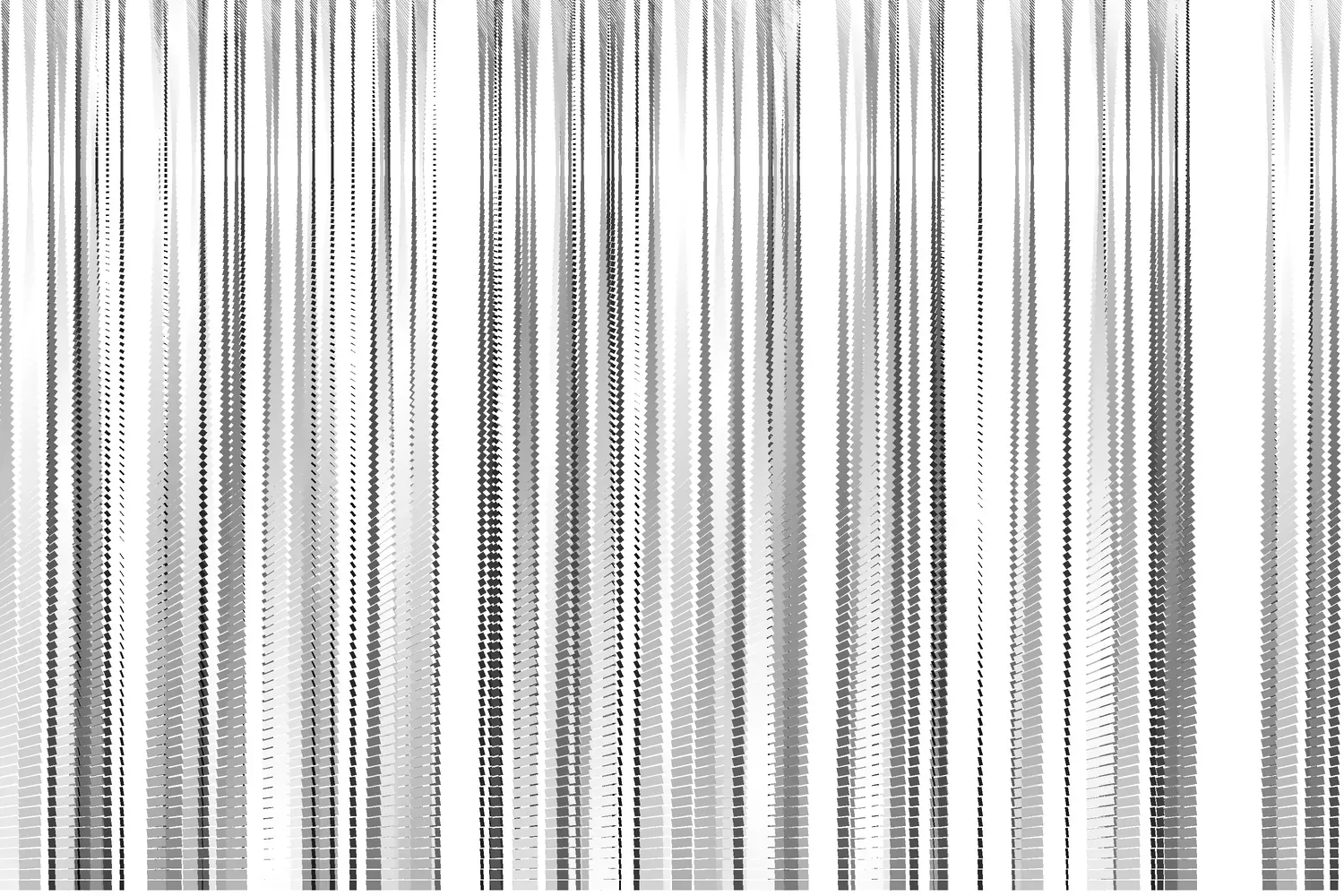
A bar drops from the top of the window and speeds up as it falls, as if under gravity, turning a degree with every frame. Its grey steps from white to black and back. When it reaches the bottom it starts again from a random point along the top. The window is never cleared, so every fall stays on the screen as a twisting ribbon. I exported it as a web applet in April 2011.

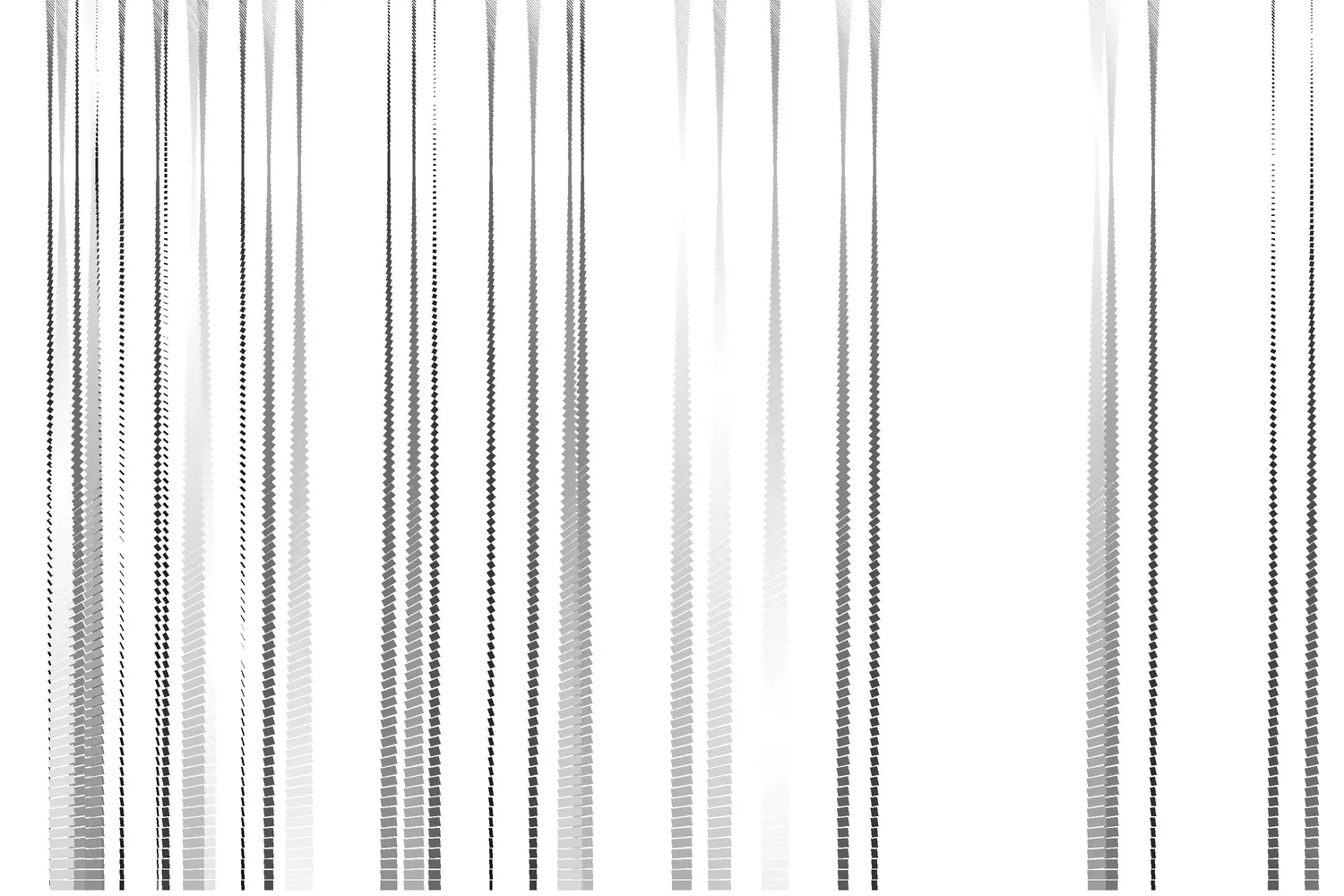
A thinner version from 21 February 2011 shrinks the bars as they fall, so the ribbons turn into lines, like a barcode.
Spin
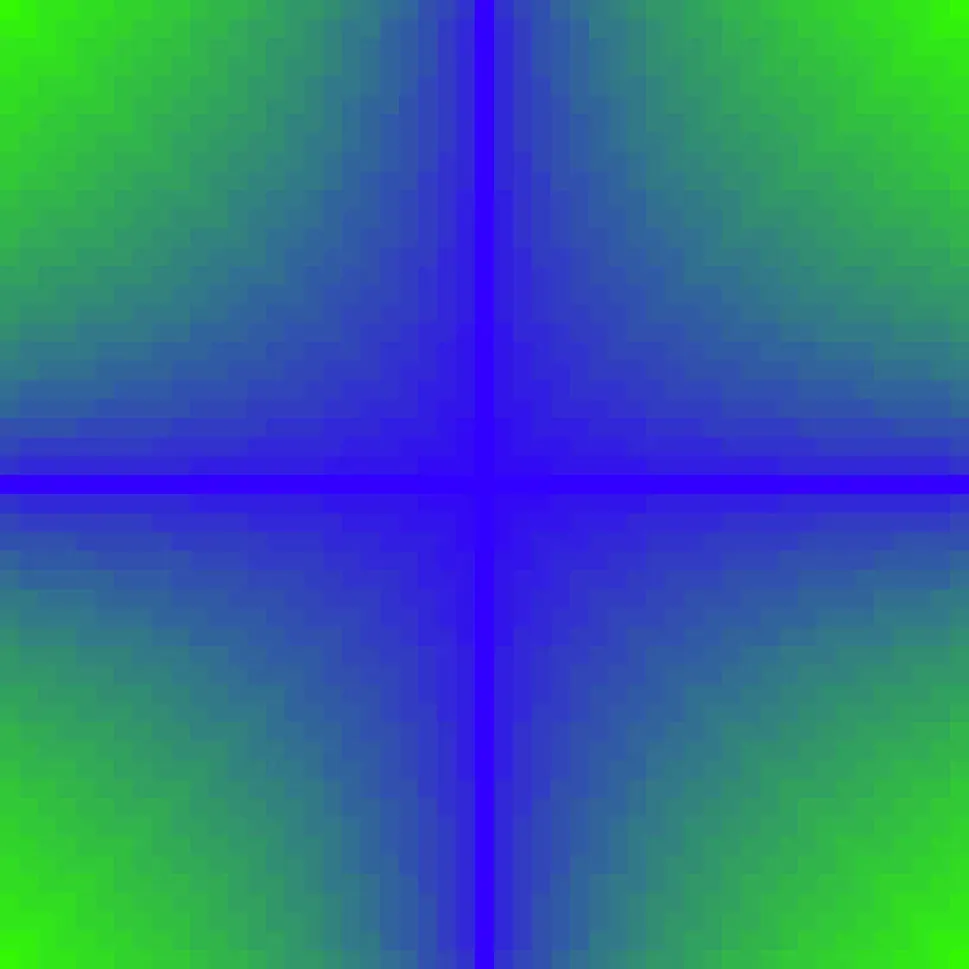
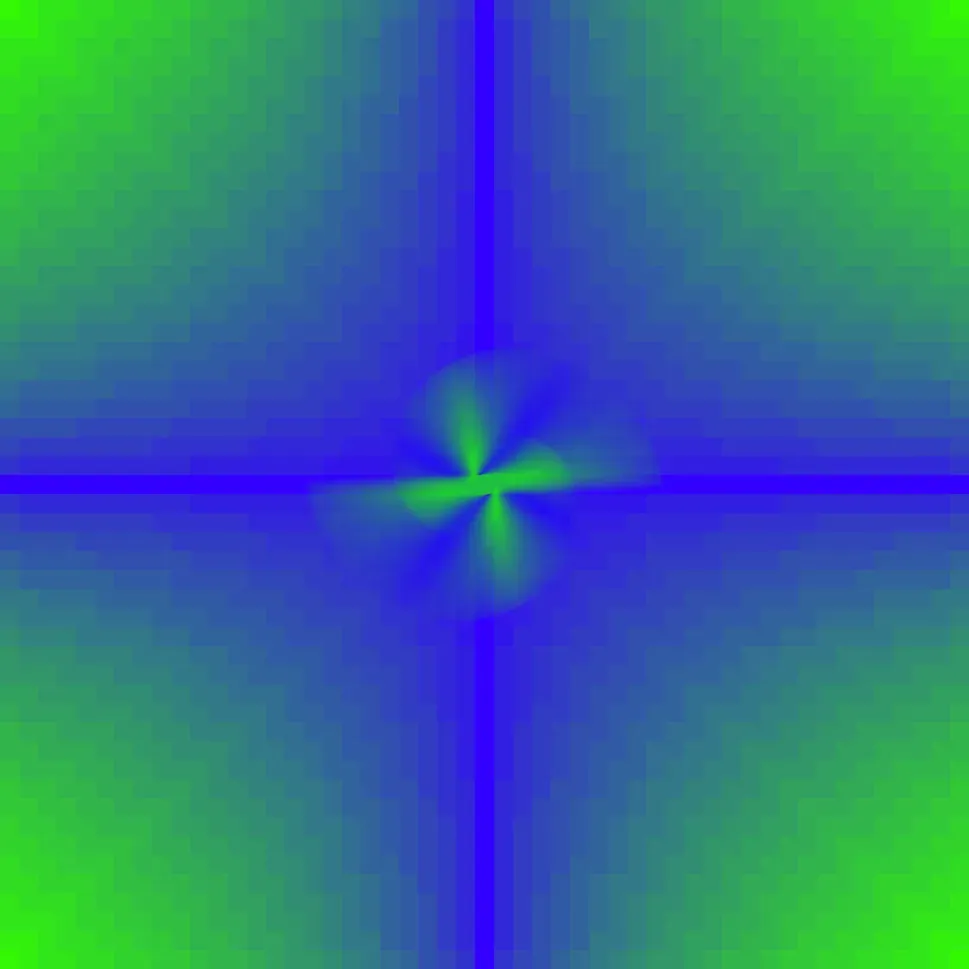
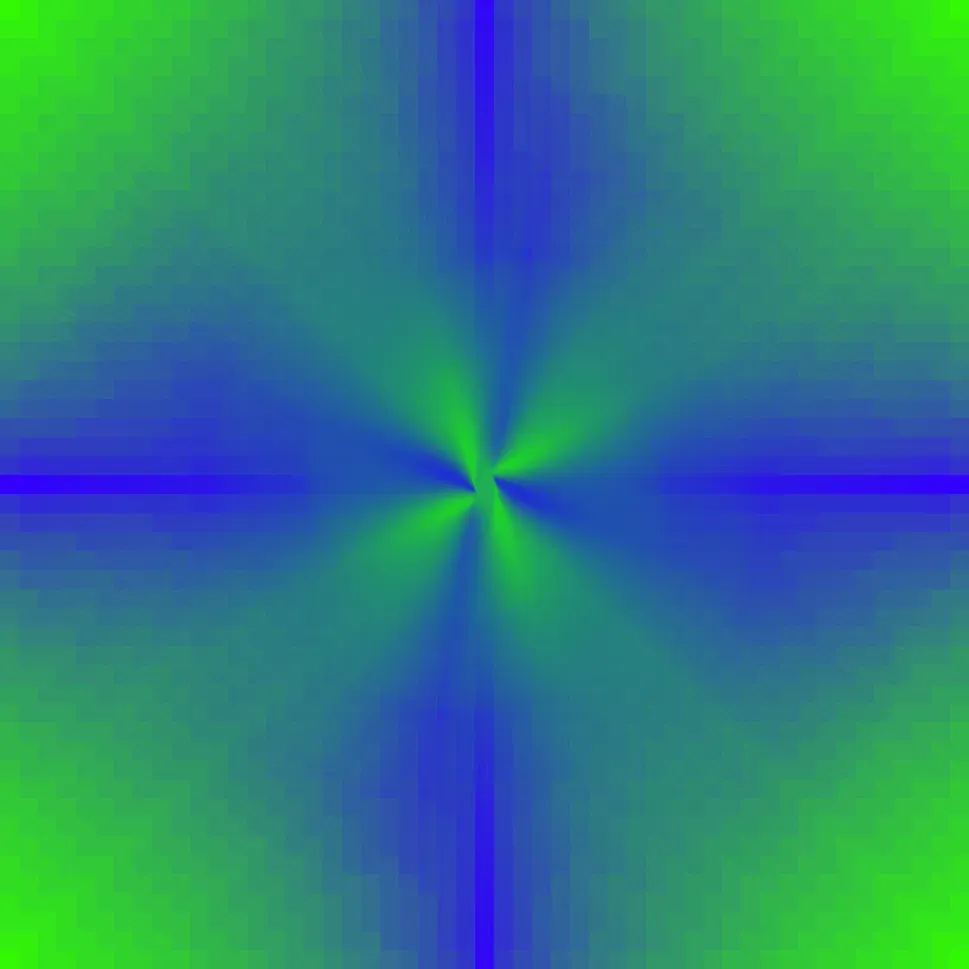
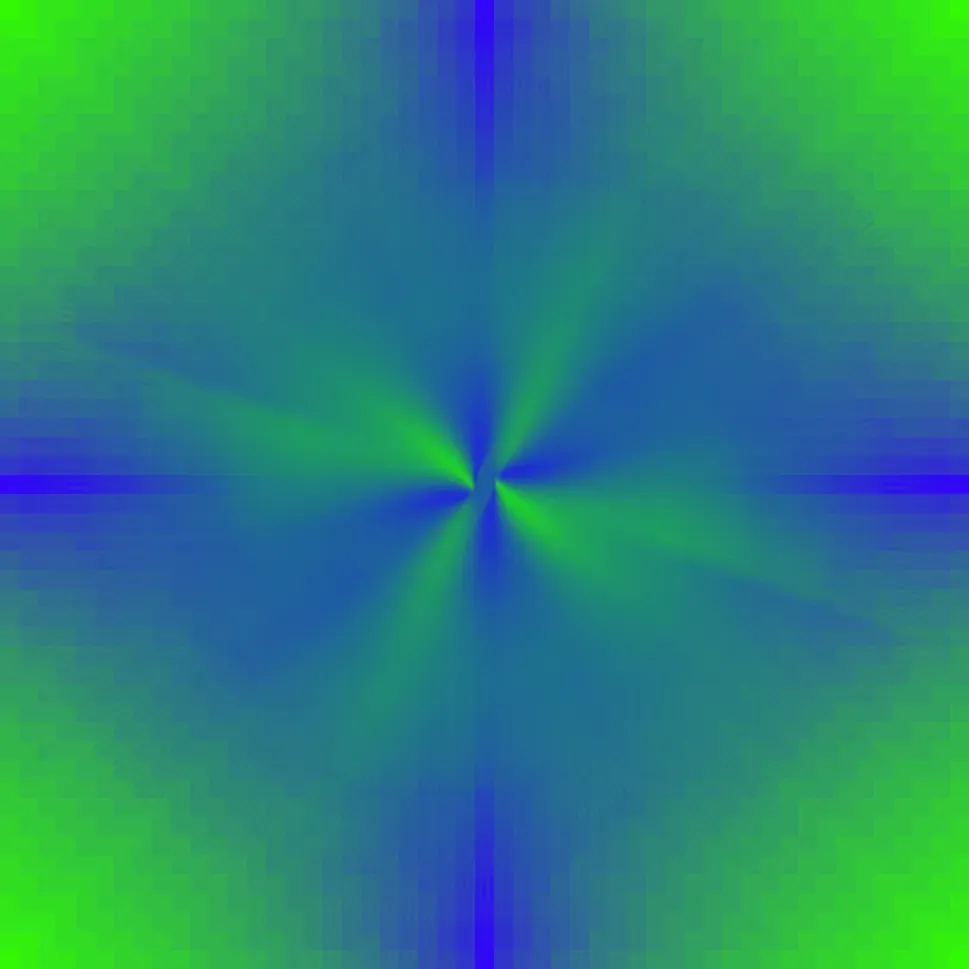
A grid of 51 by 51 squares, shading from blue along the centre lines to green in the corners, from 19 February 2011. On top of it a translucent ellipse turns around the centre a degree at a time, growing longer each frame and shifting between green and blue.
2012: sound
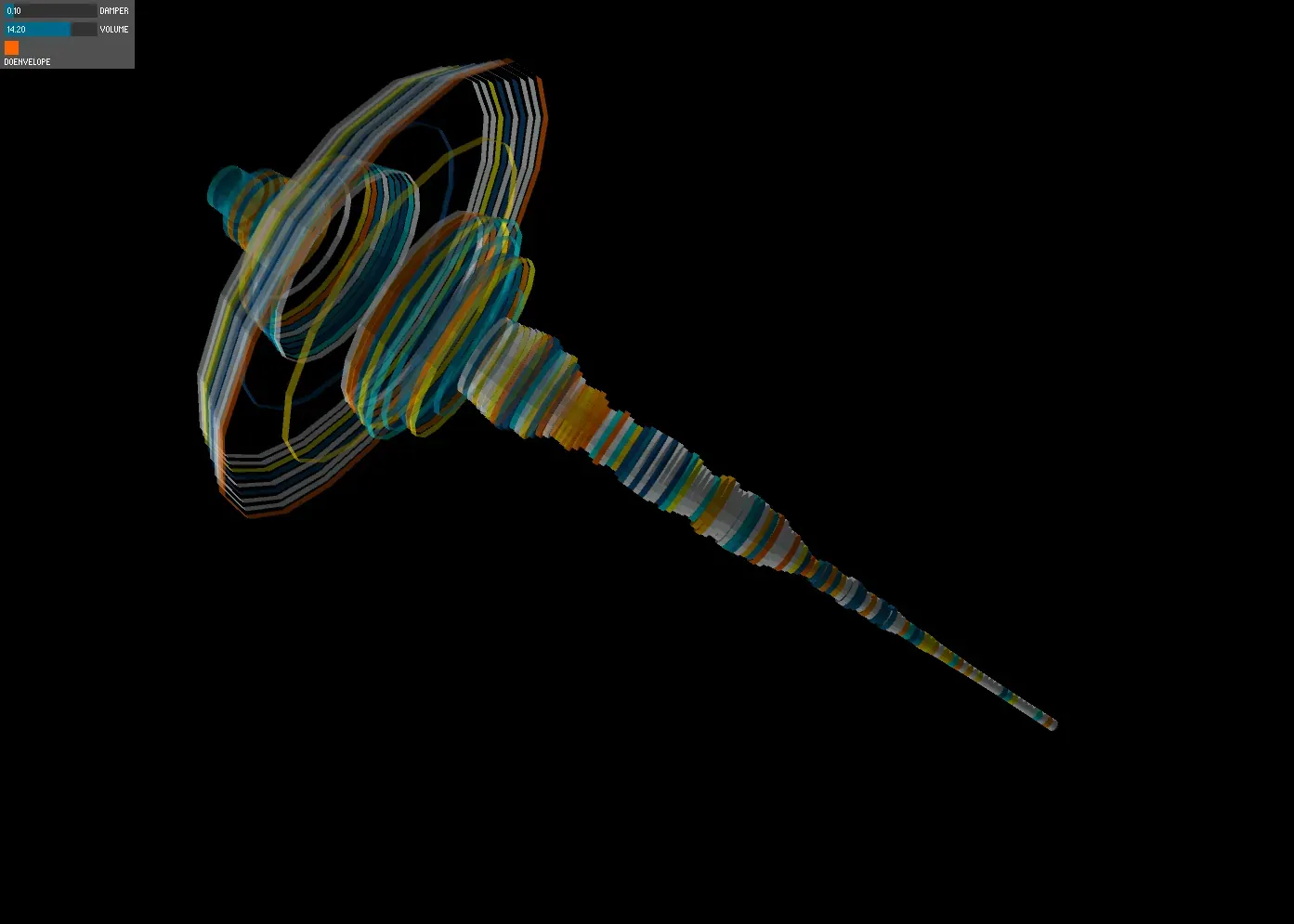
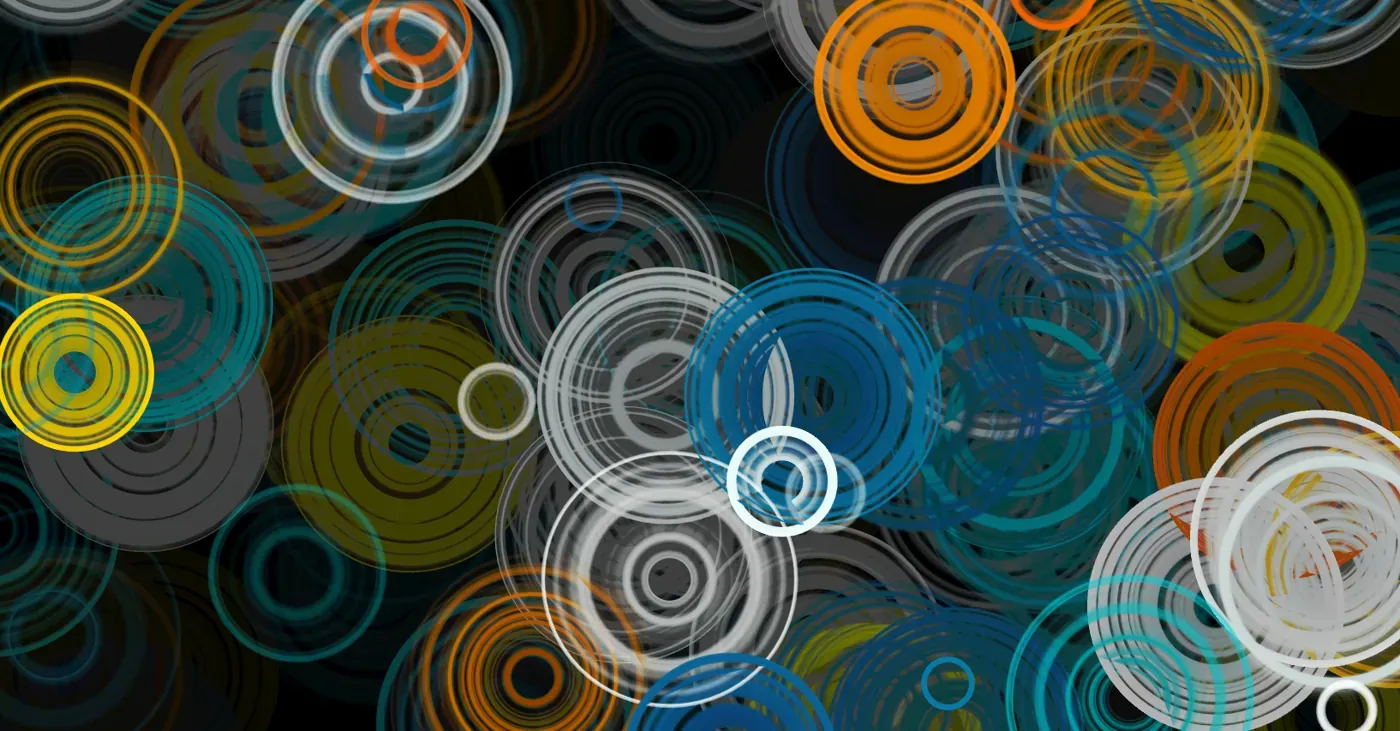
In August 2012 I worked through a set of sketches on sound-responsive visuals, built on Marius Watz’s Modelbuilder library. Music is broken into frequencies, and the frequencies drive the shapes. These two are screenshots I kept, from the course’s example code.
2017: surfaces to print
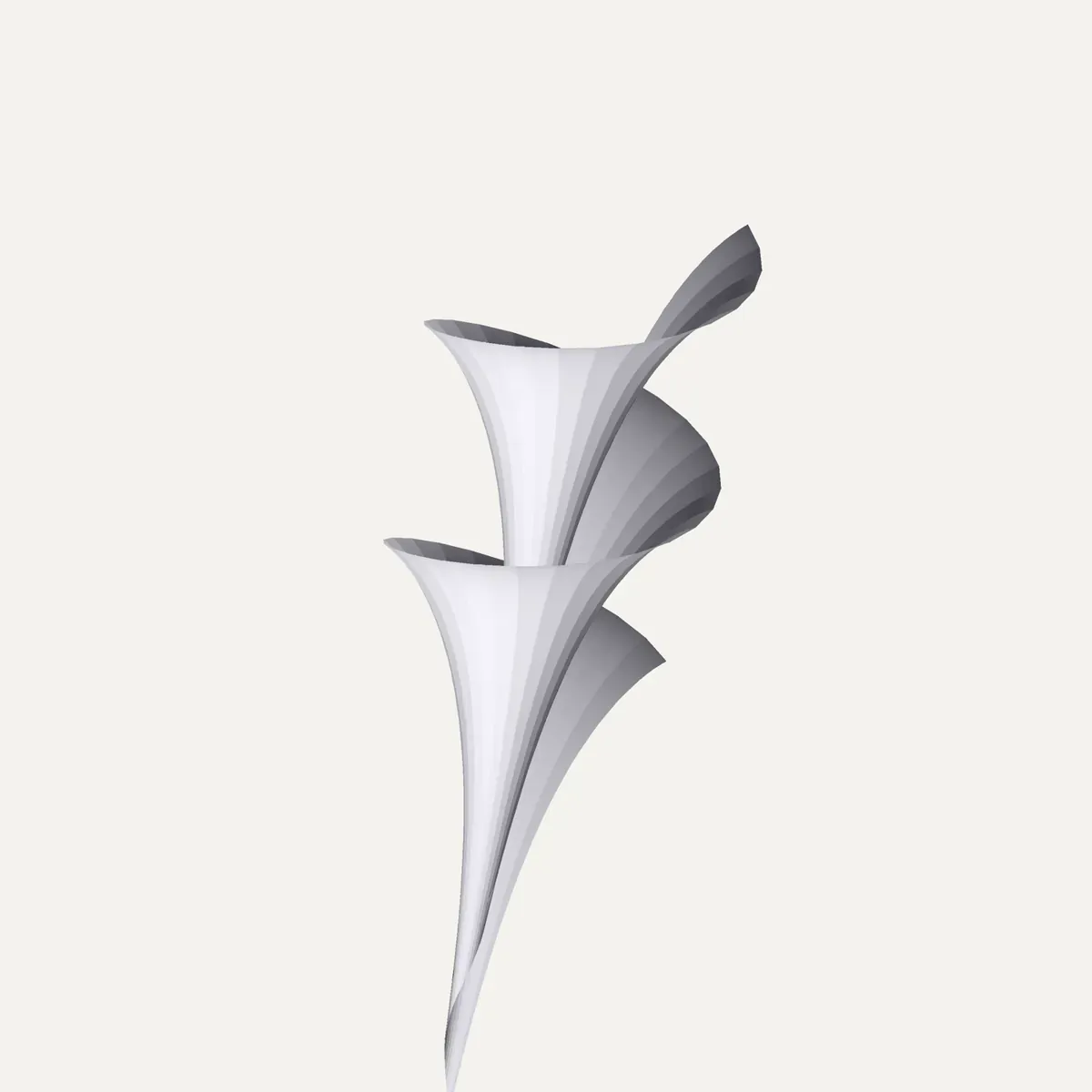
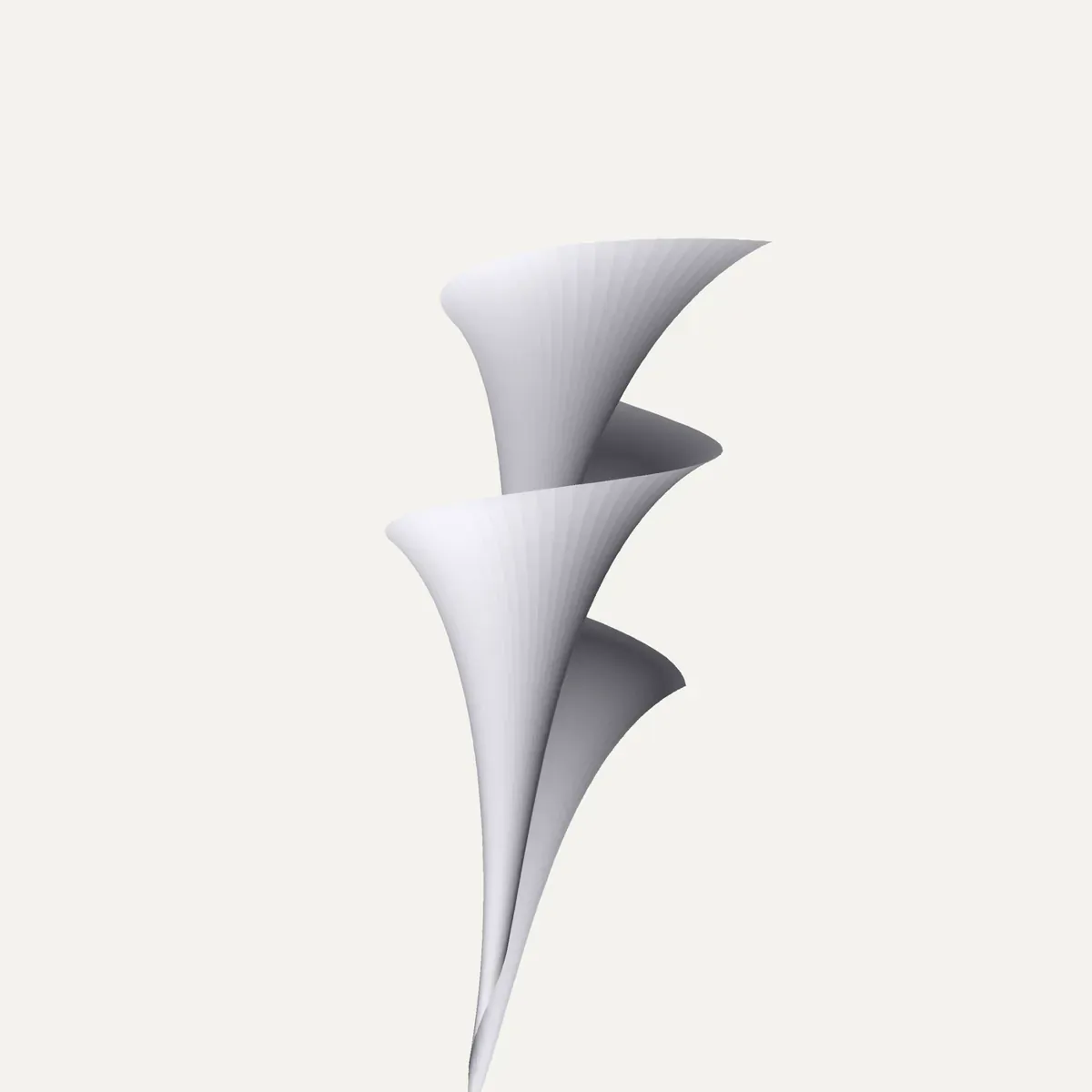
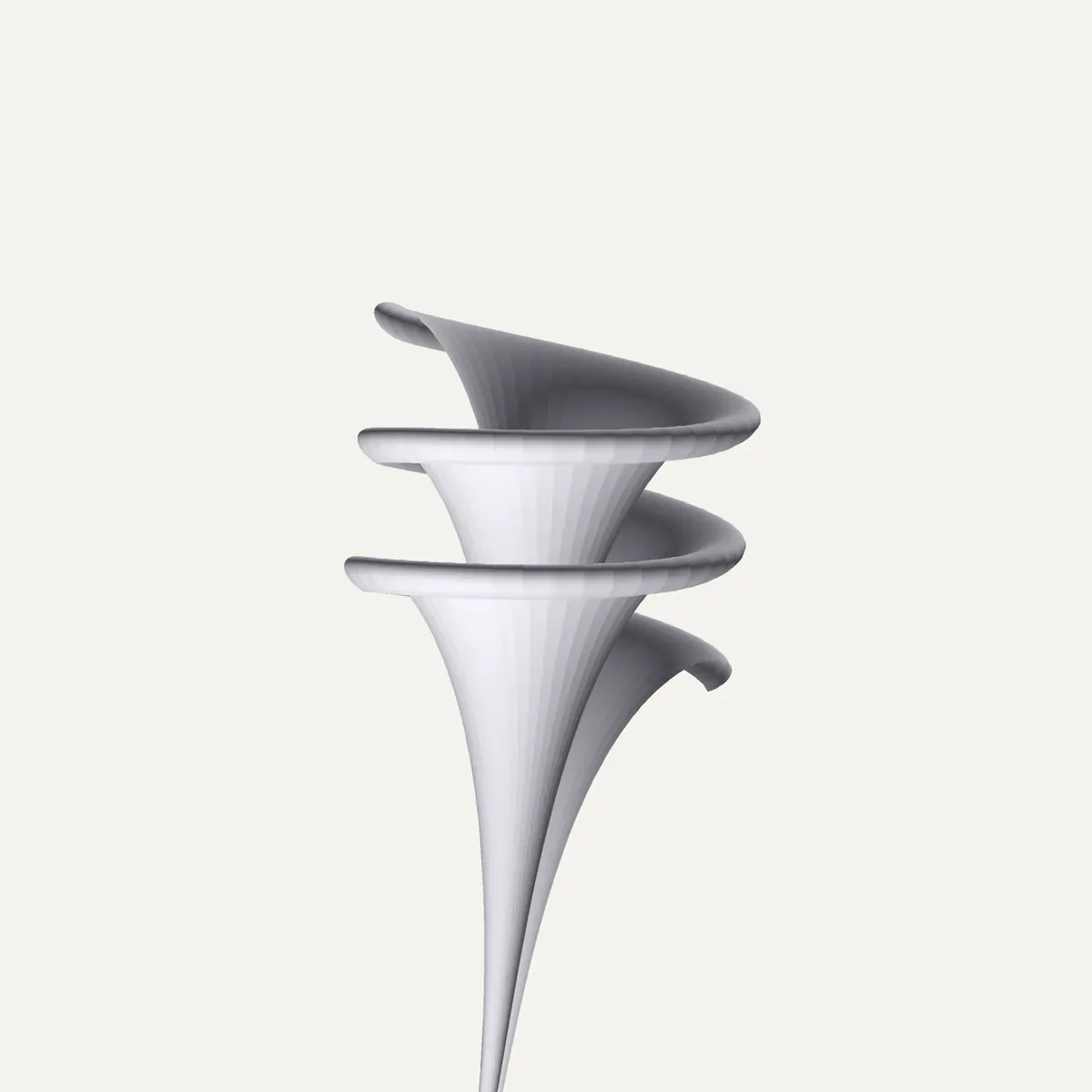
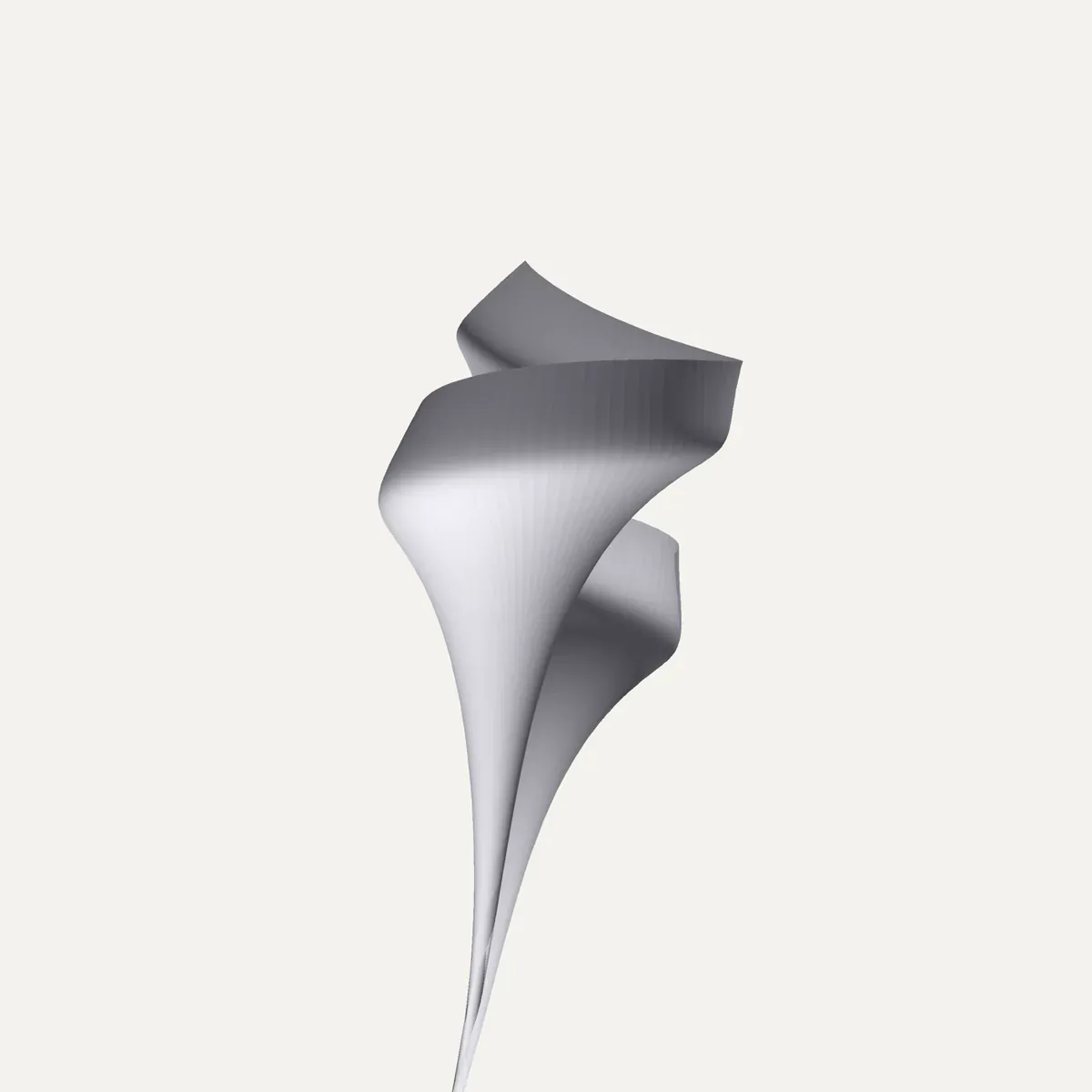
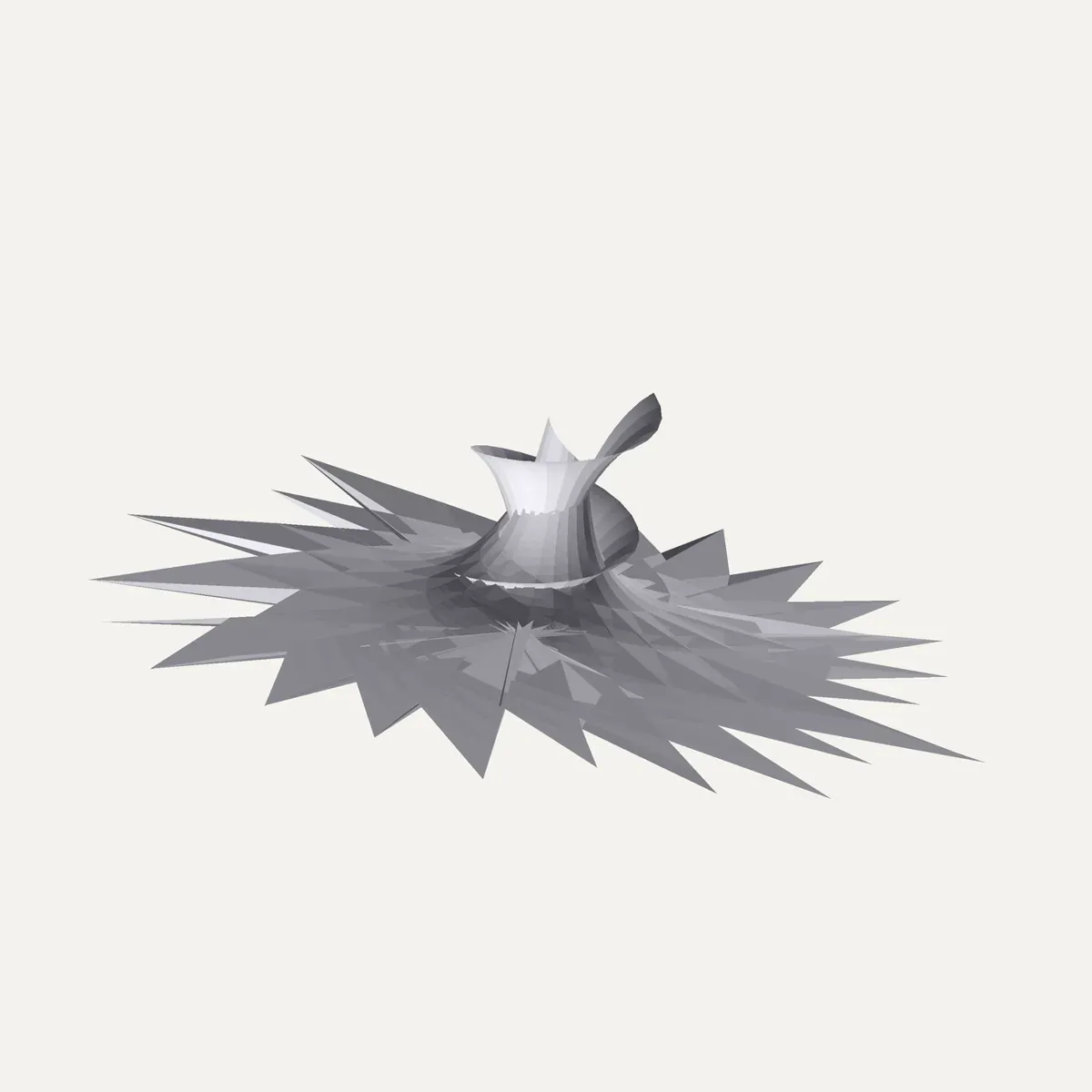
In March 2017 Processing came back as a way to make things for the resin printer. Using the hemesh library, the sketches built the Voronoi vessels in Light in Resin, and Dini’s surface, a spiral like a twisted horn. Between 18 and 24 March the Dini sketch was run again and again, bending and twisting the surface and saving each one as a mesh. These are renders of five of them.