TikTok Ads Manager
Guided campaign creation for advertisers moving from intent to launch.
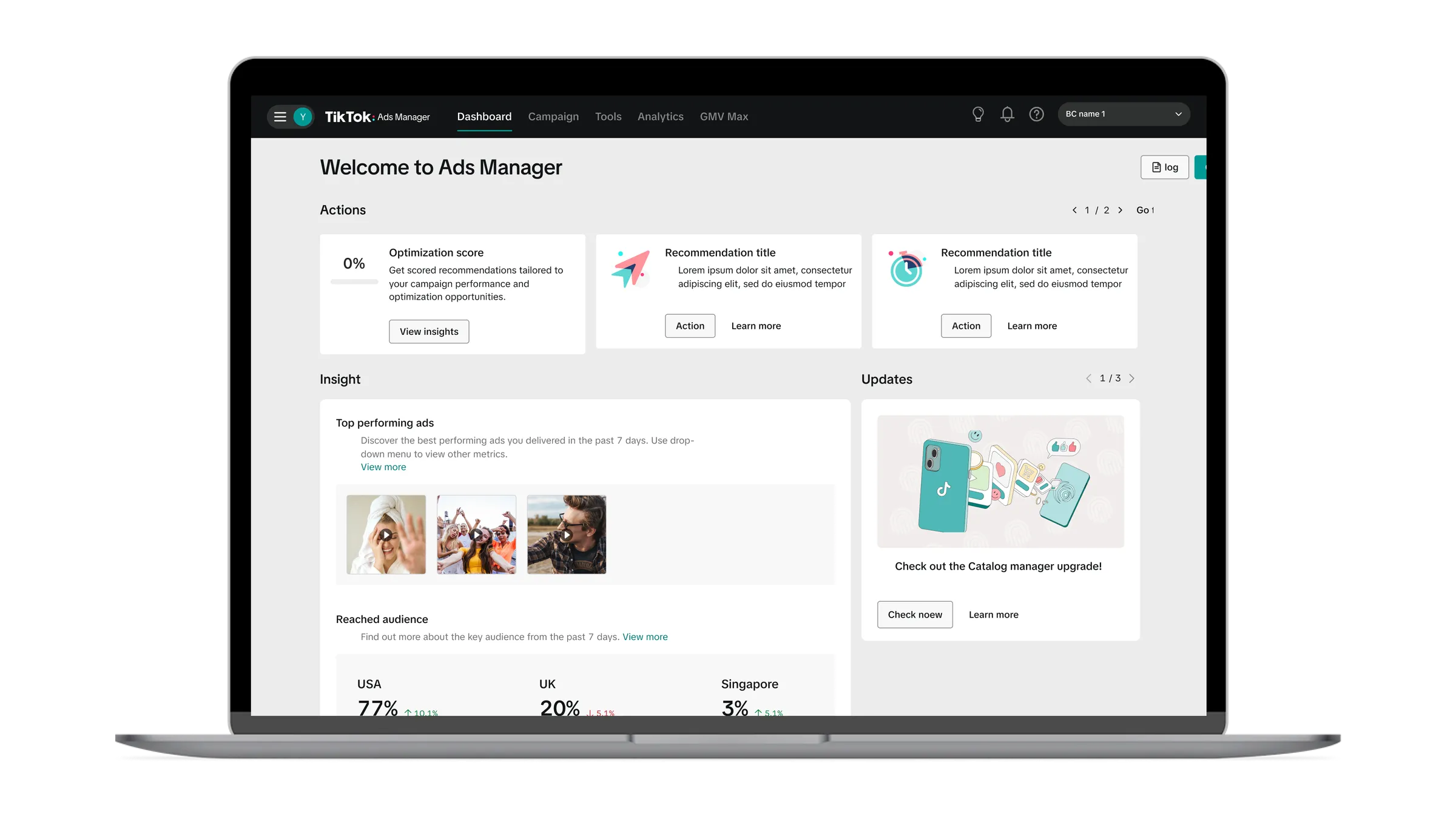
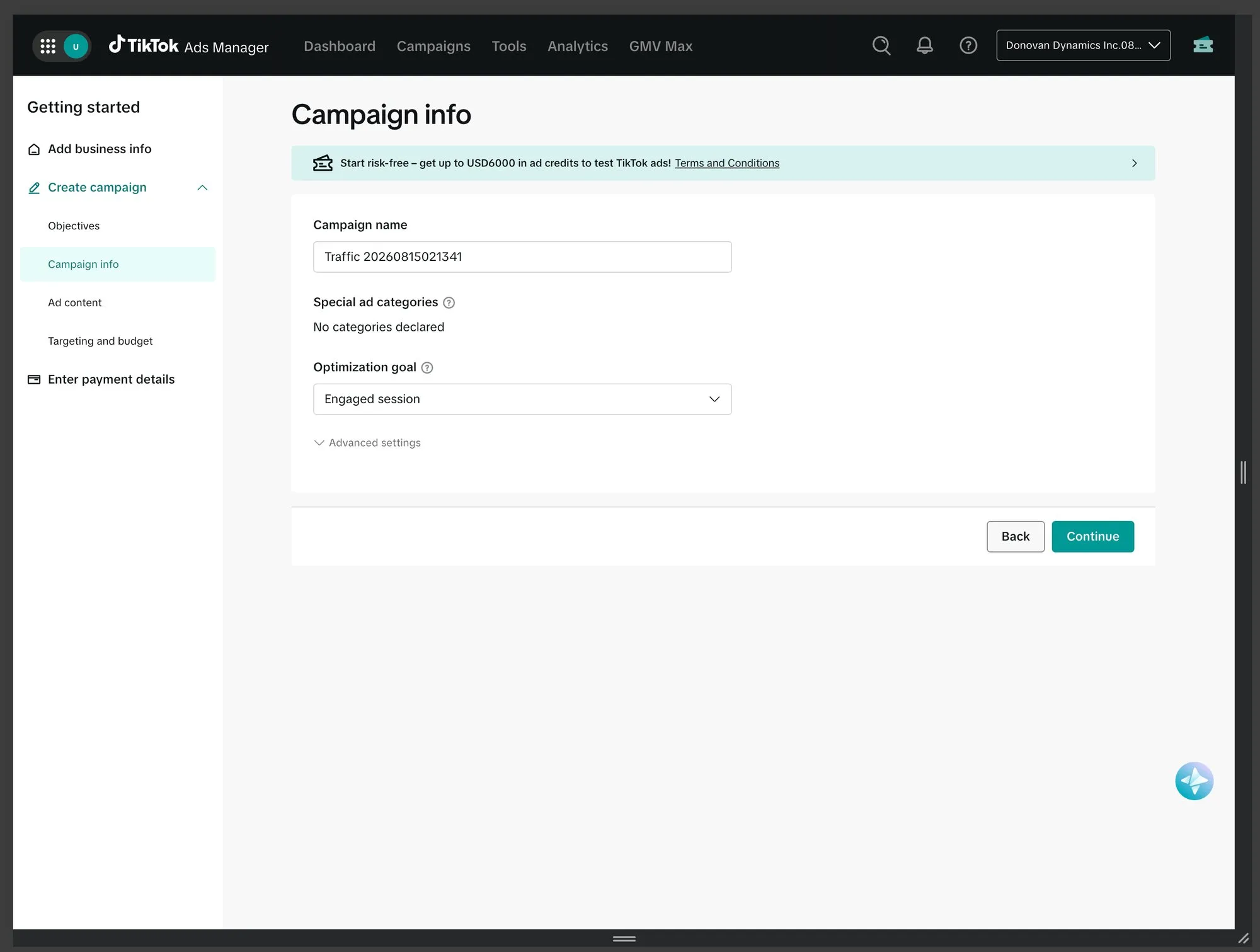
This case study uses advertiser-facing screenshots to show how objective selection, incentive guidance, campaign setup, creative connection, targeting and publishing can be organized into one legible workflow. It avoids internal metrics, unreleased strategy and non-public roadmap material on purpose. What remains is the craft: reducing setup ambiguity, making an offer understandable, and helping a new advertiser move through a complex system with enough confidence to act.
Turning intent into a product decision
The first job of a campaign flow is not to expose every advertising control. It is to help someone name what they are trying to accomplish, understand the immediate tradeoffs, and move forward without losing the option to add sophistication later.
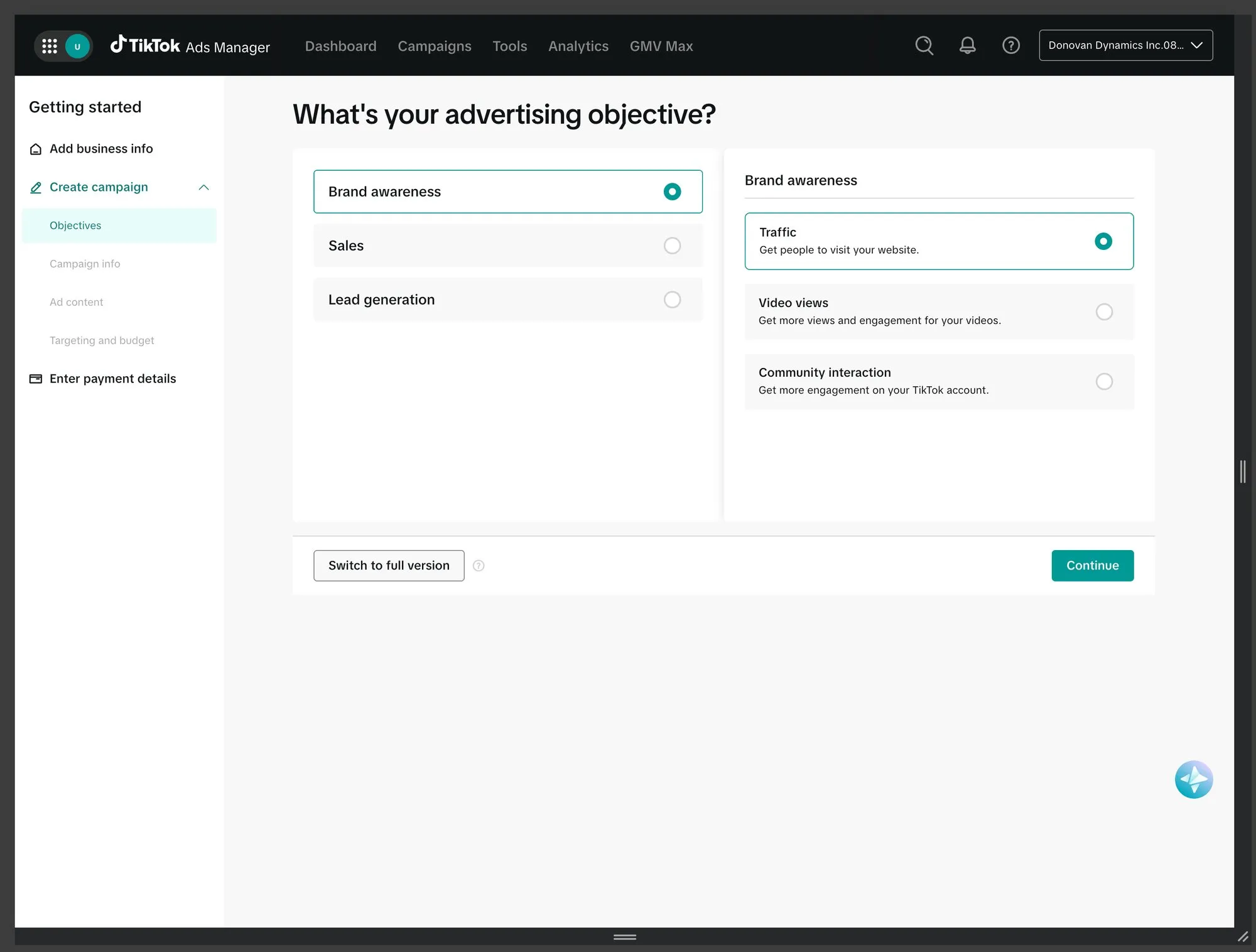
The objective screen separates broad goals from the more specific optimization paths beneath them. An advertiser chooses in business language first, and only then does the product ask about budget, targeting, creative and measurement.
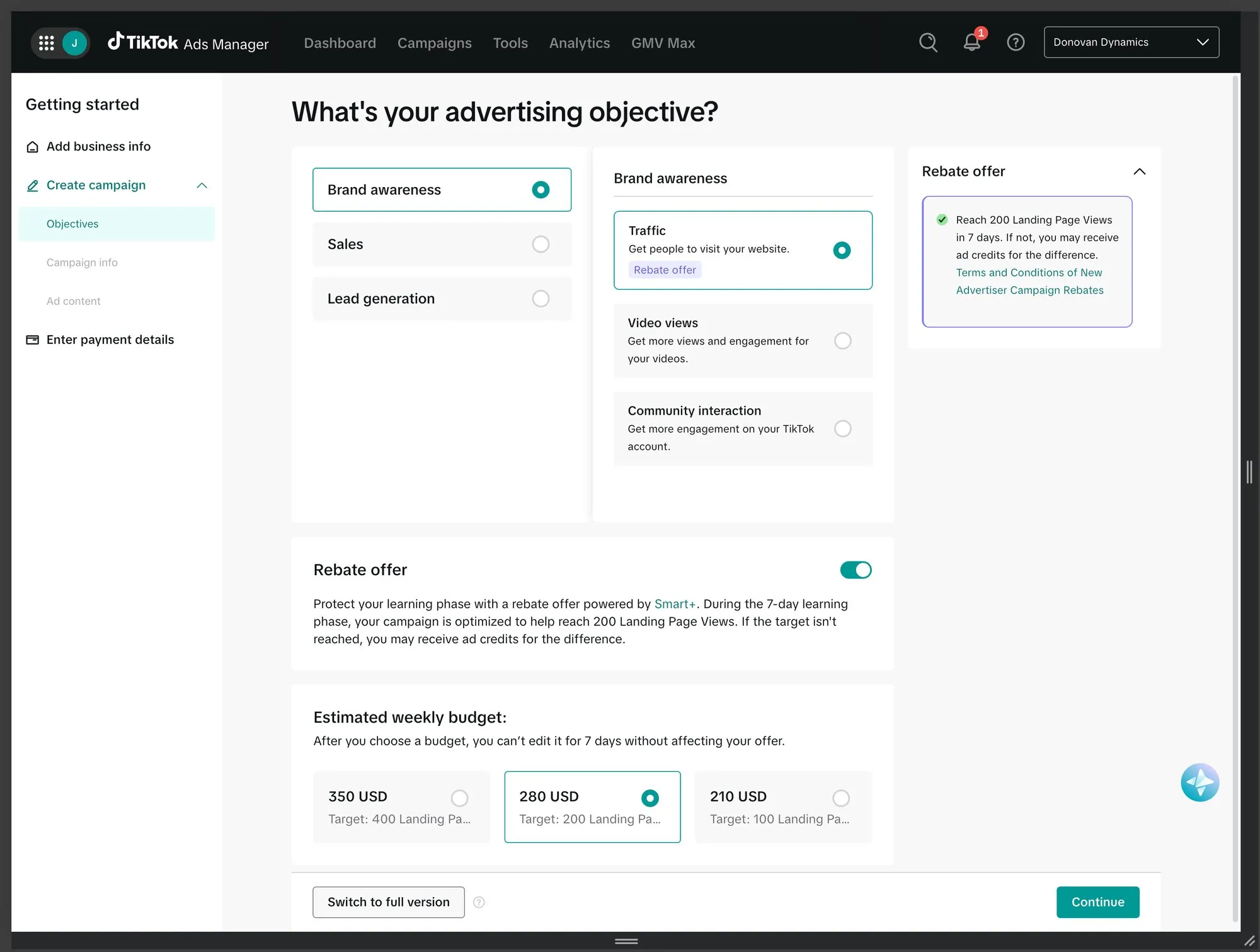
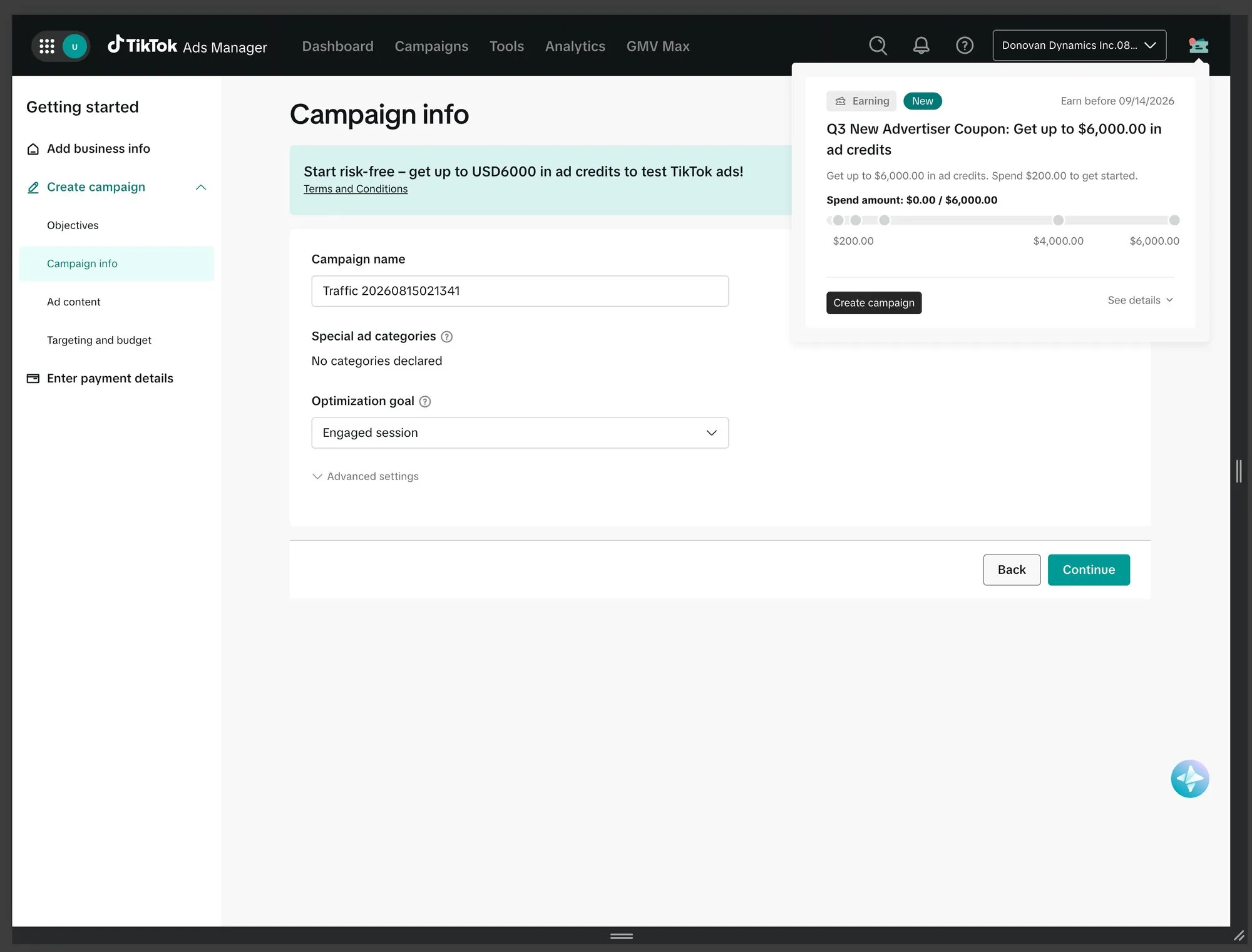
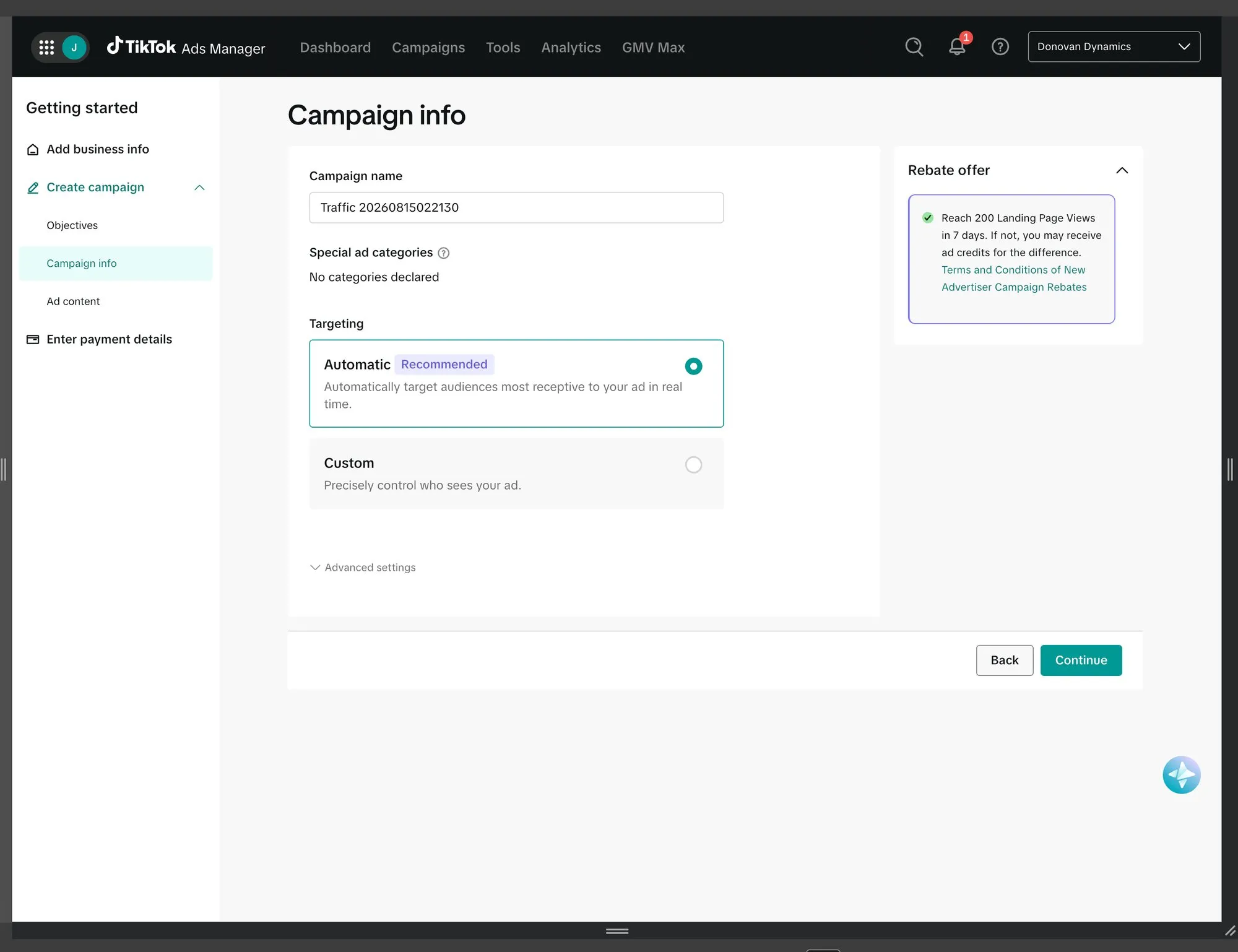
Incentive information belongs next to the decision it changes. The rebate offer appears in the right rail, paired with the objective and the estimated weekly budget it affects, while the main flow stays on campaign creation.
Making the offer operational
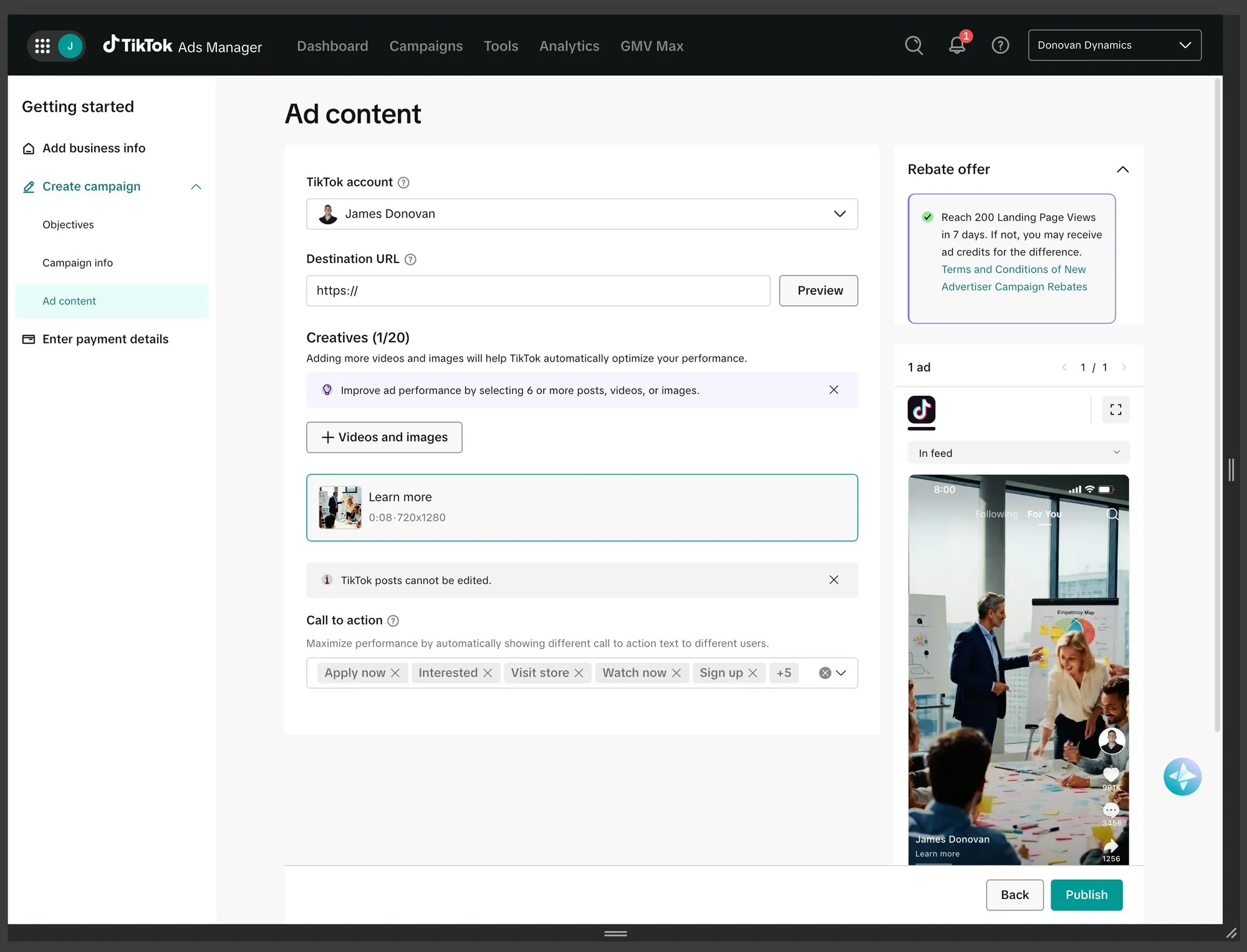
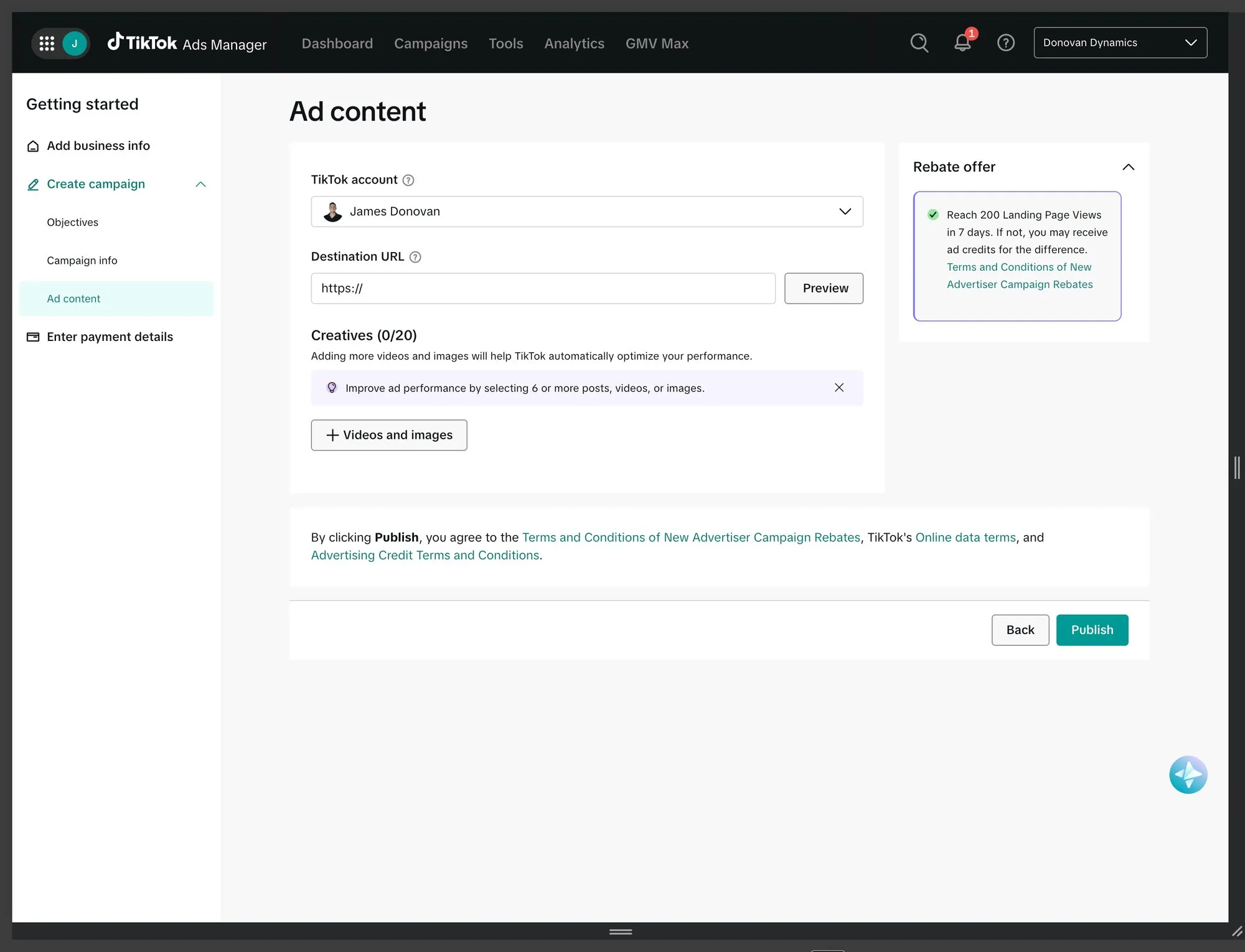
Promotional mechanics tend to feel bolted on. A stronger interface gives the offer a job: explain the threshold, clarify the timeline, and show which decisions help the advertiser qualify, without turning the campaign form into a legal document.
Creative, targeting, publish
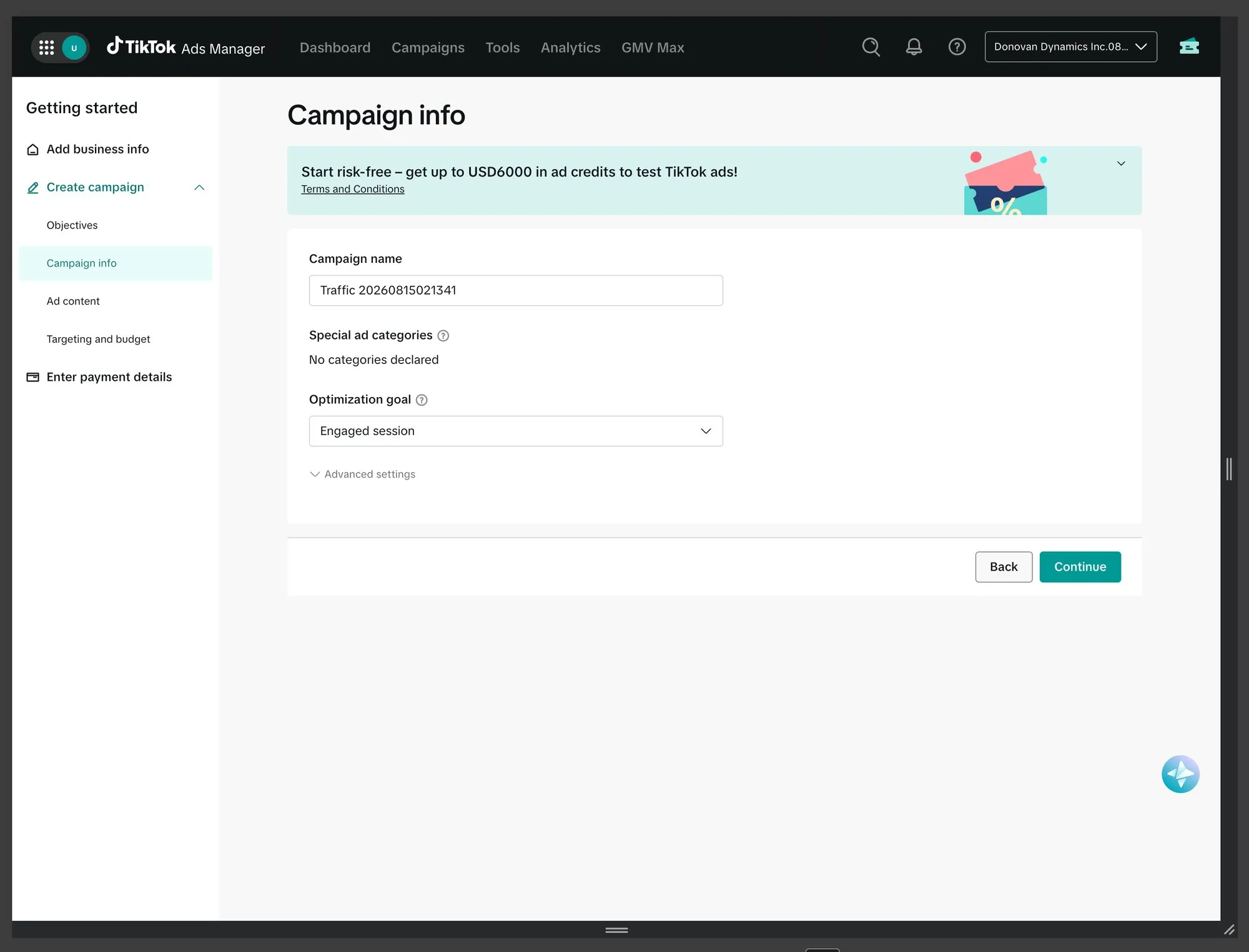
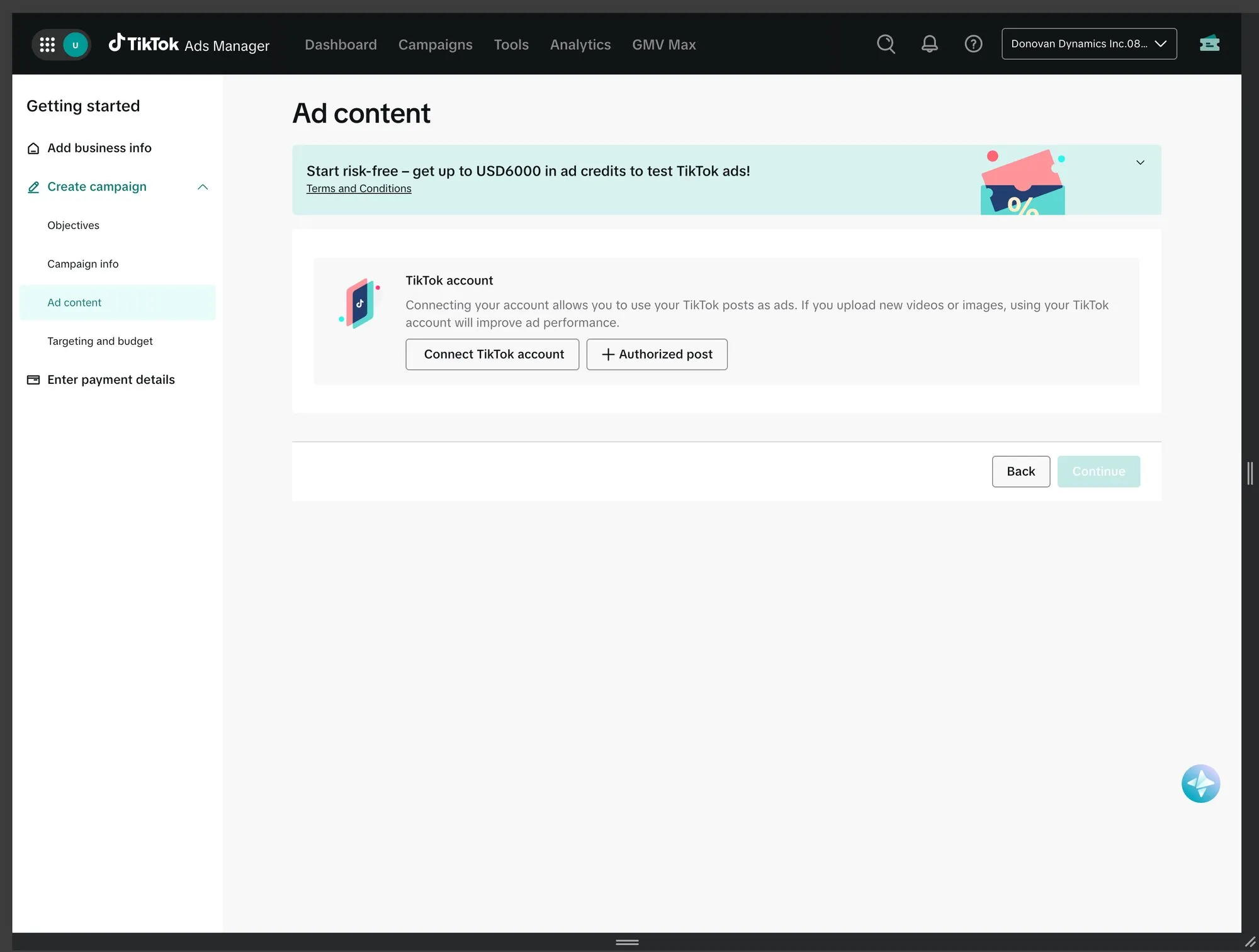
Once the goal is understood, the work shifts from choice architecture to completion architecture: connect an account, provide a destination, add creative, choose targeting, understand the terms, publish.
Three principles
Turn choice into sequence. Objective, budget, offer, creative, targeting and publish decisions are easier as a guided path than as a dense configuration surface.
Place help where it changes behavior. Incentive details are most useful beside the decisions they influence: objective, threshold, spend, optimization and readiness.
Make guidance inspectable. Recommendations, defaults and promotional mechanics are more credible when the advertiser can see the reasoning, compare the alternative, and continue.
The durable design problem here is not campaign creation. It is confidence creation. An advertiser needs to understand what they are optimizing for, why a recommendation exists, what is still missing, and when they are ready to launch. The strongest patterns make those states visible without exposing all of the system’s complexity at once.